Write to us:

There was a time when video games didn’t need to explain themselves.
No quest markers. No cinematic introductions. No achievement notifications. No glowing arrow telling you exactly where to go.
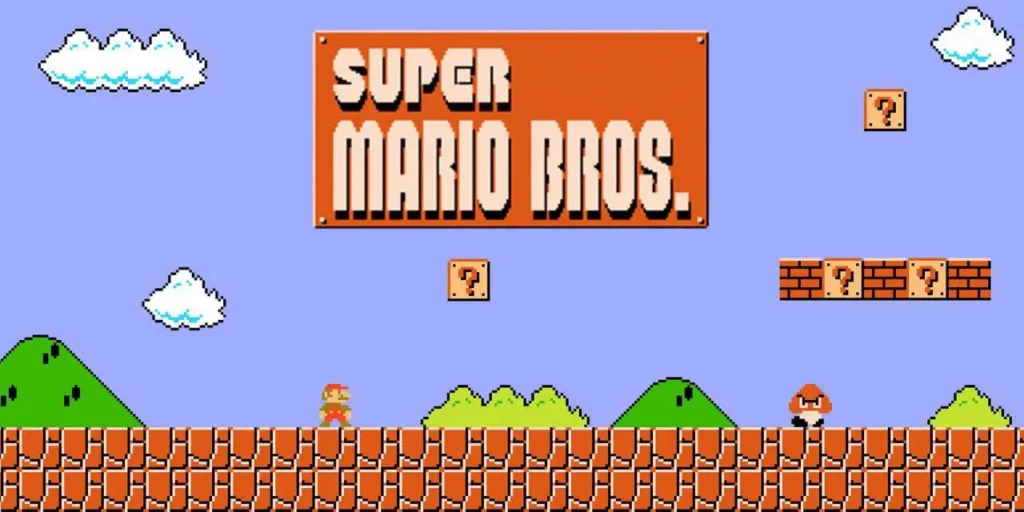
Just a screen, a controller, a few pixels — and a little plumber standing at the beginning of a world you had never seen before.
On September 13, 1985, Nintendo released Super Mario Bros. for the Famicom in Japan. Now Super Mario Bros turns 40 as a reminder of just how much that tiny cartridge changed gaming.
Mario isn’t just a character. He’s the face of gaming itself.
Forty years ago, a pixelated Italian plumber hopped onto our screens, smashed a question block and accidentally invented modern gaming as we know it.
On September 13, 1985, Nintendo dropped Super Mario Bros. for the Famicom in Japan—and the rest is basically gaming history. Four decades later, Mario isn’t just a character. He’s the face of gaming itself: red cap, blue overalls, that moustache, and yes, that voice we all pretend not to know by heart.
In 2025, Super Mario Bros. officially clocked 40 years. And honestly? Calling Mario “old” still feels wrong.
The Day Mario Went Super
Mario wasn’t born in Super Mario Bros. He first appeared as Jumpman in 1981’s Donkey Kong, got renamed Mario, then starred with Luigi in Mario Bros. (1983)
But Super Mario Bros. is the game that turned him from “that arcade guy” into a global superstar. Released on the Famicom on September 13, 1985, it introduced us to the Mushroom Kingdom, Princess Peach, Bowser, Goombas, Koopa Troopas, Warp Pipes—and one of the most recognizable soundtracks ever.
Nintendo made something deceptively simple:
- Run.
- Jump.
- Dodge enemies.
- Grab coins.
- Save the princess.
- Repeat.
Under that simplicity? Some of the smartest game design ever put on a cartridge.
Mario isn’t the only Nintendo icon celebrating a major milestone. We also looked at The Legend of Zelda’s 40-year journey and how another 8-bit classic evolved into something much bigger than a video game.
A Tiny Cartridge With a Huge World
What made Super Mario Bros. feel different was movement and discovery. The screen scrolled as Mario ran—players didn’t clear static screens, they traveled through a world.
Secrets were everywhere:
- Hidden blocks
- Warp zones
- Secret rooms
- Coins just out of reach
- “Decorative” pipes that absolutely led somewhere
And then there’s World 1-1, arguably one of the most important levels ever designed. It teaches you how to play without a single word:
- First Goomba → enemies hurt
- First question block → hit stuff from below
- First pipe → the world has secrets
No tutorial screen. The level is the tutorial. That philosophy shaped generations of platformers.
The Soundtrack That Colonized Pop Culture
Another reason Super Mario Bros. sticks in your brain: the music. Composer Koji Kondo turned game music from background noise into cultural memory.
That cheerful Mushroom Kingdom theme became inseparable from Mario himself. You might not have touched an NES in 20 years, but play those first few notes and your brain instantly knows where it is.
That’s the weird power of retro tech:
- Graphics age badly
- Hardware disappears
- Resolutions look ridiculous
- But the sounds? They survive.
Mario Arrived at Exactly the Right Moment
Super Mario Bros. hit during a rough patch for gaming. The North American video game market had crashed in the early ’80s, and confidence in home consoles was wrecked.museum.enjoygamejapan+1
Nintendo’s play was different. Instead of just selling a box, they built an ecosystem around tightly designed games and characters. Super Mario Bros. became the system seller. You didn’t buy an NES because you needed more electronics under your TV—you bought it to play Mario.
Suddenly, games weren’t just arcade distractions. They were living-room staples.
From 8-Bit Pixels to 3D Worlds
One of the wildest parts of Mario’s story is how well he survived every tech shift:
- 8-bit Mario: a handful of pixels pretending to be a person
- 16-bit era: Super Mario World
- 3D revolution: Super Mario 64
- Later: Super Mario Galaxy, Super Mario Odyssey, Super Mario Bros. Wonder
Tech changed dramatically. The core philosophy didn’t:
- Mario moves
- Mario jumps
- Player experiments
- World reacts
That consistency is one of Nintendo’s biggest achievements.
Mario Is Bigger Than Video Games
At some point, Mario stopped being “just a Nintendo character” and became a cultural icon. There are Mario toys, clothes, theme-park zones, movies, merch, and endless spin-offs.
He’s been in racing games, sports titles, party games, RPGs, fighting games—and then there’s Mario Kart, which basically became its own phenomenon.
He also crossed generations. The parent who played Super Mario Bros. on NES can now play Mario with their kids. In tech, that’s rare. Most stuff becomes obsolete. Mario became nostalgia and nostalgia is hard to kill.
Super Mario Bros turns 40: Not Just Looking Back
Nintendo officially kicked off the Super Mario Bros. 40th anniversary in September 2025 with a Nintendo Direct and a year-long celebration.
This wasn’t just a retrospective. Nintendo used the moment to announce new projects, including:
- Super Mario Galaxy + Super Mario Galaxy 2 for Switch (October 2, 2025), with enhanced UI, new storybook content, and a free 4K upgrade for Switch 2 ownersausretrogamer+2
- The Super Mario Galaxy Movie, the sequel to the 2023 film, set for worldwide release on April 3, 2026colombiaone+3
- New amiibo (Mario & Luma, Rosalina & Lumas), plus Switch 2 titles like Mario Tennis Fever and Yoshi and the Mysterious Bookausretrogamer+1
- Special 40th-anniversary ticket designs and light installations at the Nintendo Museum in Kyoto.
The message was clear: after 40 years, Nintendo still sees Mario as a character who can carry new games, new hardware, and new stories. That’s not just nostalgia. That’s longevity.
Why Mario Still Matters
Yes, today’s games have photorealistic graphics, massive open worlds, online multiplayer and cinematic storytelling. And yet, put the original Super Mario Bros. in front of someone who’s never played it, and the basic idea is instantly clear.
That’s the beauty of great design. It doesn’t need cutting-edge tech. It needs clarity. Nintendo’s 1985 masterpiece understood something a lot of modern games forget:
Fun doesn’t need to be complicated.
The Strange Immortality of 8-Bit
Forty years after Mario first ran across that blue sky, the original Super Mario Bros. still feels alive.
- Graphics? Primitive.
- Enemies? Simple.
- Story? Basically one sentence.
- World? Made of pixels.
But the game is still instantly playable. And maybe that’s the real test of a classic: not whether it looked revolutionary at launch, but whether someone can pick up the controller decades later and immediately get why people loved it.
Mario passes that test. Every time.
Happy 40th, Mario
Here’s to the plumber who taught millions that:
- A brick might hide a secret
- Mushrooms can make you bigger
- Sometimes the answer is inside a pipe
- And one more life is always worth trying again
“It’s-a me, Mario.”
And apparently, we’re still not tired of hearing it.
Mario’s longevity is unusual in technology. Most hardware and software eventually disappear. For another look at a technology that became a cultural memory, read our story of Microsoft Zune.
Glitchback Verdict
- 🕹️ Iconic: 10/10
- 🎵 Soundtrack: 10/10
- 🎨 Pixel aesthetic: 10/10
- 🧠 Game design: 10/10
- 🧓 Age: 40 years
- 🚀 Still relevant: Absolutely
Super Mario Bros. isn’t just a retro game. It’s one of the pieces of software that helped define what video games would become.
Super Mario Bros 40th Anniversary FAQ
When was Super Mario Bros. released?
Super Mario Bros. was released for the Nintendo Famicom in Japan on September 13, 1985.
When was the Super Mario Bros. 40th anniversary?
The 40th anniversary of Super Mario Bros was September 13, 2025, marking 40 years since the original Famicom release.
How old is Mario?
Mario first appeared as Jumpman in Donkey Kong in 1981. The character was later named Mario and became Nintendo’s most recognizable video game icon.
Why is Super Mario Bros important?
Super Mario Bros helped establish the modern platform game, popularized side scrolling level design and became one of the defining titles of the Nintendo Entertainment System era.