Write to us:
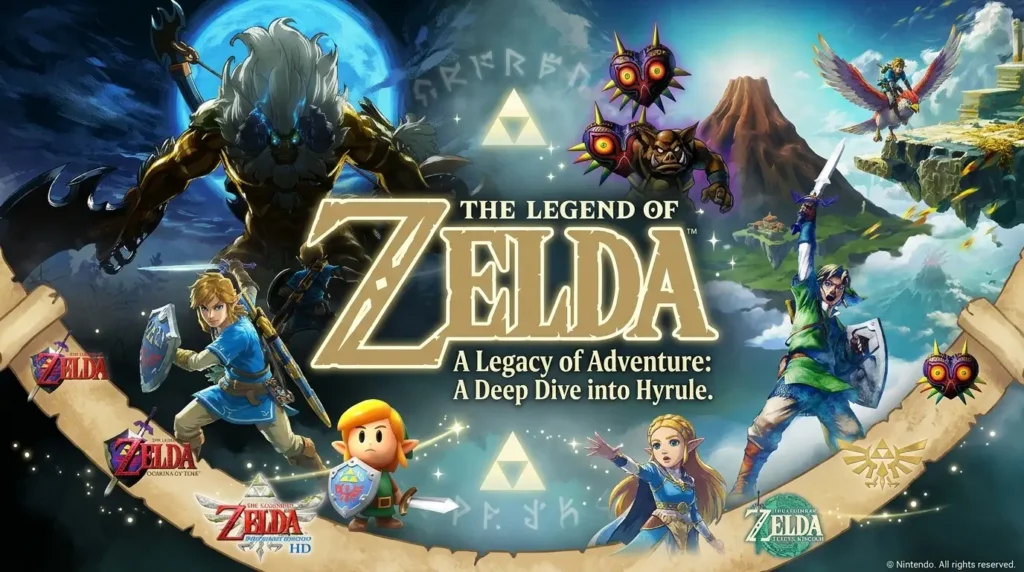

There was a time when games didn’t explain themselves.
No glowing waypoint. No quest log nudging you forward. No voice in your ear reminding you what to do next. Just a blinking screen, a quiet melody, and a feeling that somewhere out there, beyond the edges of what you understood, something was waiting.
For many of us, that feeling began with The Legend of Zelda.
Released in 1986 for the Famicom Disk System in Japan and later on the NES worldwide, Zelda didn’t just offer a game. It offered a world. And more importantly, it trusted you to get lost in it.
Forty years later, that trust still feels radical.
The World Before Zelda
To understand what Zelda changed, you have to remember what games were like before it.
Most early titles were built around repetition. Arcade design dominated the industry: short loops, rising difficulty, high scores. Even on home consoles, games like Super Mario Bros. (1985) still followed a linear, left-to-right structure.
You moved forward. You progressed. You completed levels.
Zelda broke that expectation almost immediately.
Instead of pushing you in a direction, it dropped you into the middle of Hyrule and simply… let go.
No instructions beyond “It’s dangerous to go alone.” No map handed to you. No markers telling you where to begin.
Just curiosity.
1986: A Cartridge That Could Remember
One of Zelda’s quiet revolutions wasn’t just its design, it was its technology.
The original game included a battery backed save system, something that was nearly unheard of at the time. Instead of writing down passwords or starting over, your adventure could persist.
That persistence changed how players related to games.
- Your journey mattered
- Your discoveries stayed with you
- The world felt continuous rather than disposable
It’s hard to overstate how important this was. Zelda wasn’t just something you played, it became something you returned to.
That emotional shift laid the groundwork for modern RPGs, open-world games, and narrative driven experiences.
The Magic of Not Knowing
If there’s one thing that defined early Zelda, it was mystery.
Bomb a random wall, and suddenly it opens.
Burn a bush, and uncover a hidden staircase.
Play a melody, and change the world itself.
Nothing announced itself. Secrets existed because the world allowed them to exist, not because the game wanted to show them off.
This created a very specific kind of emotional experience:
- You felt clever for discovering something
- You felt small in a world that didn’t revolve around you
- You felt connected to other players through shared secrets
In schoolyards, magazines, and early internet forums, Zelda wasn’t just played, it was discussed.
“How did you find the white sword?”
“Did you know there’s a dungeon under that lake?”
Zelda became a social mystery long before online multiplayer made that a design goal.
Ocarina of Time and the Birth of 3D Adventure
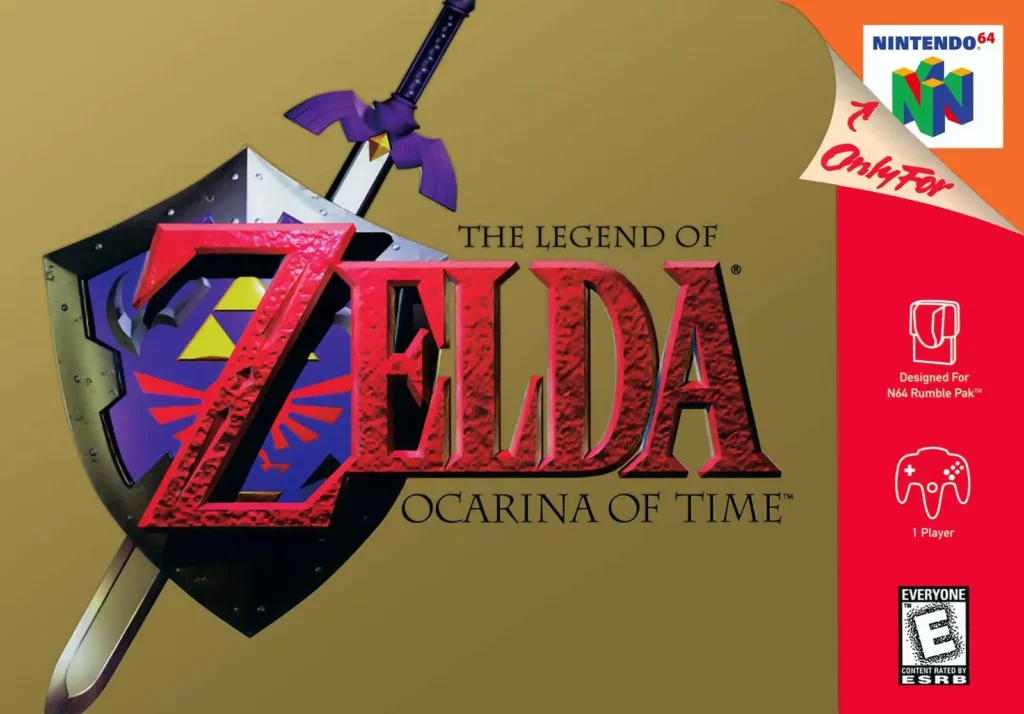
By the late ’90s, gaming had shifted dramatically into 3D. Many franchises struggled to make the transition.
Zelda didn’t just adapt, it redefined the space.
Released in 1998, Ocarina of Time is still widely regarded as one of the most influential games ever made. It introduced systems that are now standard across the industry:
- Z-targeting, which allowed players to lock onto enemies in 3D space
- Context-sensitive controls that simplified complex interactions
- A cinematic approach to storytelling within an open environment
But beyond mechanics, Ocarina captured something harder to define.
A sense of growing up.
You didn’t just play as Link, you experienced time passing, innocence fading, and a world changing around you. The shift between child and adult Link wasn’t just a gameplay mechanic; it was emotional storytelling.
For many players, it mirrored their own transition into adolescence.
Majora’s Mask: Time, Loss, and Unease
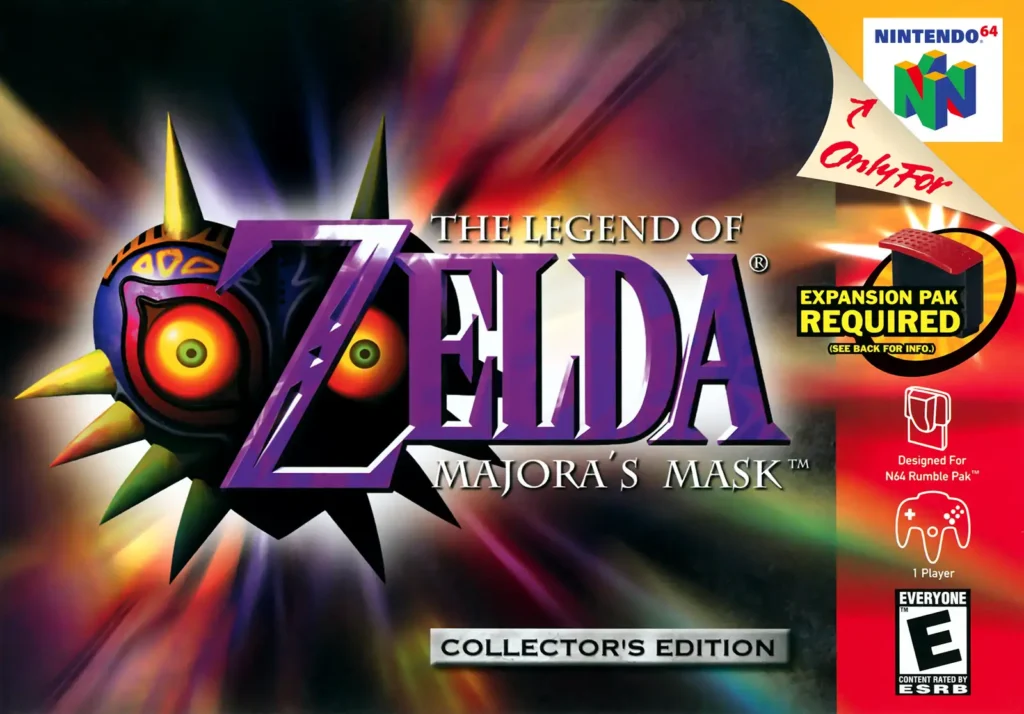
If Ocarina was about growth, Majora’s Mask (2000) was about anxiety.
Built on the same engine, it took a radically different direction. Instead of a sprawling heroic quest, you were trapped in a repeating three-day cycle, watching the world inch closer to destruction.
NPCs followed schedules. Stories unfolded whether you intervened or not. And beneath it all was a quiet, persistent dread.
Majora’s Mask challenged players in ways few games dared to:
- It forced you to confront failure and repetition
- It explored themes of grief, loneliness, and inevitability
- It made side characters feel deeply human
At the time, it felt strange, even unsettling. Today, it’s often seen as one of the most emotionally complex games Nintendo has ever produced.
Wind Waker and the Courage to Be Different
When The Wind Waker was revealed in 2002, the reaction was… mixed.
Fans expecting a realistic follow-up to Ocarina were instead given bold cel-shaded visuals, expressive characters, and a brighter tone.
But time has been kind to Wind Waker.
Its art style aged beautifully, while many “realistic” games of the era did not. More importantly, it expanded Zelda’s sense of scale.
The ocean wasn’t just a backdrop, it was a space to explore, to get lost in, to feel alone within.
Sailing between islands, guided only by the wind and your own curiosity, captured something essential about Zelda: the joy of quiet discovery.
Twilight Princess and the Pull of Darkness
By 2006, Nintendo responded to fan demand with Twilight Princess, a darker, more grounded entry.
It brought cinematic storytelling, a more serious tone, and a sense of weight to the world of Hyrule.
But even here, Zelda maintained its identity.
Exploration still mattered. Atmosphere still guided the experience. And moments of quiet riding across Hyrule Field at dusk, for example remained just as important as combat or story.
Twilight Princess showed that Zelda could evolve tonally without losing its core.
Breath of the Wild and the Reinvention of Freedom
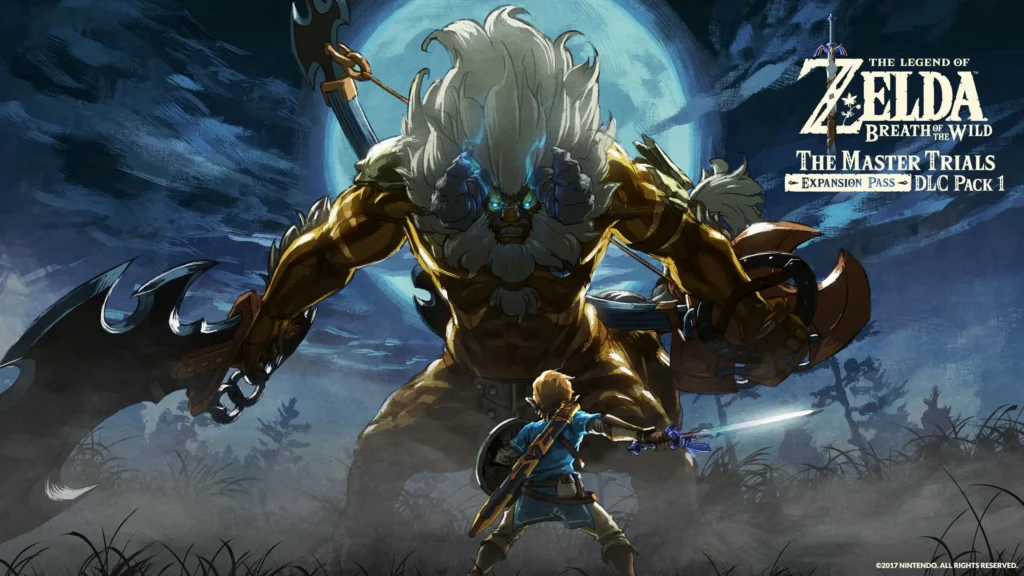
In 2017, Breath of the Wild did something extraordinary.
It looked back.
After years of increasingly structured design, Zelda returned to its roots: open-ended exploration, minimal hand-holding, and a world driven by player curiosity.
But this wasn’t nostalgia, it was reinvention.
- Physics systems allowed for emergent gameplay
- Climbing and gliding turned the entire map into a playground
- Shrines replaced traditional dungeons with bite-sized challenges
Perhaps most importantly, the game respected the player’s intelligence.
You could go anywhere. Try anything. Fail in creative ways.
Breath of the Wild didn’t just influence Zelda, it reshaped the entire industry. Its DNA can be seen in countless open-world games that followed.
Tears of the Kingdom and Creativity as Gameplay
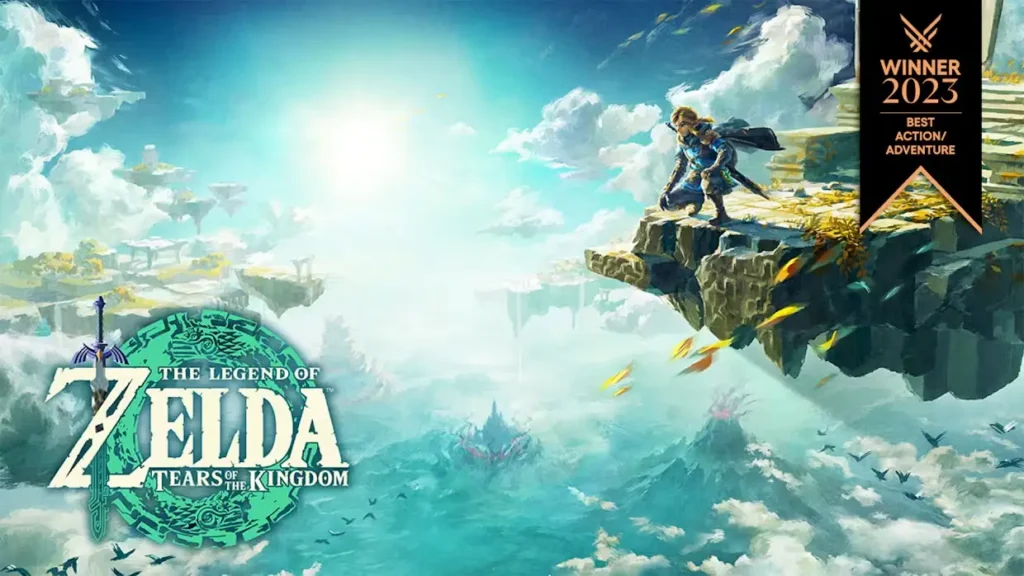
Released in 2023, Tears of the Kingdom built on that foundation but added something new: creation.
With systems that allowed players to build vehicles, machines, and solutions, the game shifted from exploration to expression.
It wasn’t just about discovering the world anymore, it was about interacting with it in deeply personal ways.
And yet, despite its complexity, it still felt unmistakably like Zelda.
Quiet moments. Subtle storytelling. A world that invites rather than demands.
Music, Atmosphere, and the Sound of Memory
Few franchises understand the emotional power of music like Zelda.
From the overworld theme of the original game to the haunting notes of Gerudo Valley and the soft piano motifs of Breath of the Wild, the series has always used sound to create memory.
Music in Zelda doesn’t just accompany gameplay—it defines it.
- Melodies often serve as gameplay mechanics (ocarina songs, wind control)
- Themes evolve across generations, creating continuity
- Silence is used intentionally to emphasize solitude and scale
For many players, hearing a Zelda track instantly transports them back to a specific moment in their lives.
That’s not just good composition, it’s cultural imprinting.
The Value of Slowness
Modern games are faster. More efficient. More guided.
Zelda, especially in its earlier entries, thrived on the opposite.
You had to:
- Experiment without guarantees
- Wander without direction
- Wait without immediate reward
That slowness created tension—but also meaning.
When you finally found a hidden dungeon or solved a puzzle, it felt earned in a way that modern convenience often dilutes.
Zelda reminds us that discovery is most powerful when it isn’t optimized.
2026: Forty Years Later
The 40th anniversary of The Legend of Zelda arrives in a very different gaming landscape.
Open-world design is now standard. Tutorials are expected. Data-driven engagement shapes many modern experiences.
And yet, Zelda still feels distinct.
Fans are celebrating not just a franchise, but a feeling—one that few games have managed to replicate.
Rumors and Expectations
As with any major anniversary, speculation is everywhere.
- Persistent rumors suggest a potential Ocarina of Time remake for Nintendo’s next-generation console (often referred to as “Switch 2” in leaks and discussions). As of now, this remains unconfirmed speculation.
- A live-action Zelda movie is officially planned for 2027, raising questions about how such a quiet, atmospheric series will translate to film.
These conversations reflect something deeper: people don’t just want new Zelda, they want to reconnect with what Zelda meant to them.
Why Zelda Still Matters
Forty years in, Zelda’s relevance isn’t just about nostalgia.
It’s about design philosophy.
In an industry that often prioritizes engagement metrics and constant stimulation, Zelda continues to value:
- Curiosity over instruction
- Atmosphere over spectacle
- Player agency over rigid structure
It trusts players.
And that trust is rare.
A Love Letter to Mystery
There’s a moment many players remember.
You’re standing somewhere in Hyrule. Maybe it’s your first time leaving Kokiri Forest. Maybe it’s stepping onto the Great Plateau. Maybe it’s sailing into open water with nothing but the horizon ahead.
For a second, nothing happens.
No enemy. No objective. No reward.
Just space.
And in that space, something clicks.
You realize the game isn’t going to tell you what to do next.
You have to decide.
Forty years later, that moment still feels magical.
Not because it’s complicated.
But because it’s rare.