Write to us:

On February 14, 2005, Valentine’s Day, a simple video sharing website launched from a San Francisco garage, evoking those dial-up screeches and MTV static of the 90s web dreams. That site was YouTube. What started as a quirky experiment by three former PayPal engineers has reshaped how we watch, share, and even live our lives, like upgrading from VHS tapes to infinite Tamagotchi feeds. Today, on its 21st anniversary in 2026, YouTube boasts over 2.7 billion monthly users, 500 hours of video uploaded every minute, and a cultural footprint deeper than the early internet itself.
This isn’t just a tech story. It’s a glitchy, nostalgic ride through the 2000s web era think 90s chatroom vibes, viral cat videos a la early Dancing Baby memes, and the dawn of influencer fame that made Blockbuster obsolete. Let’s rewind to YouTube’s founding and trace its wild evolution.
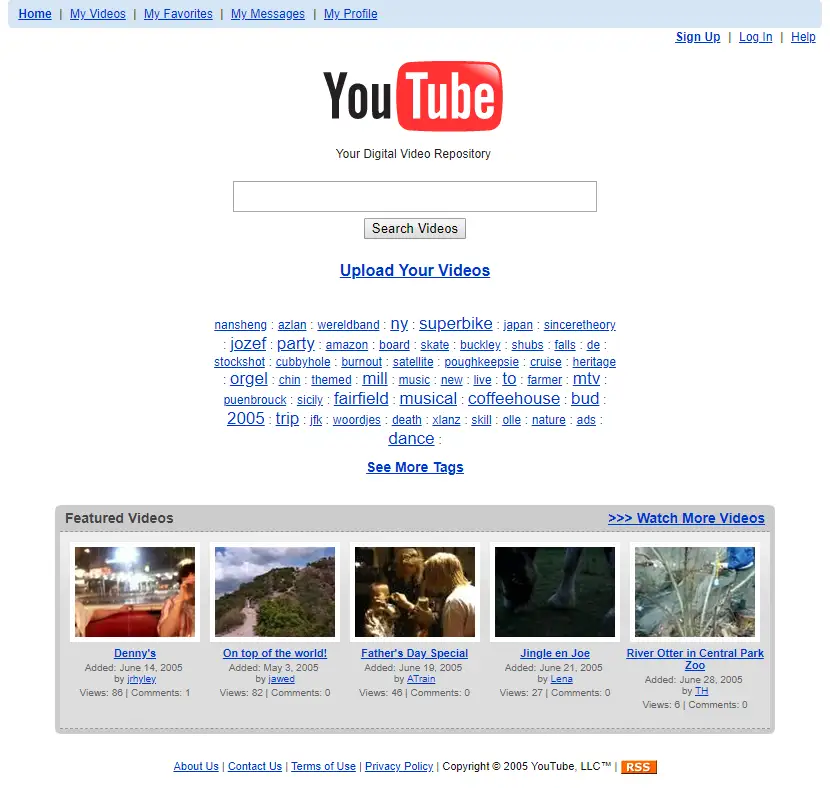
The Garage Genesis: YouTube Founded on Valentine’s Day 2005
It’s 2005, but the garage reeks of 90s startup grit. iPods blast OutKast, MySpace profiles bling with glitter GIFs, and broadband fights AOL dial-up ghosts. Three PayPal Mafia alumni, Steve Chen, Chad Hurley, and Jawed Karim—hatch YouTube over pizza.
The spark? Frustration, pure 90s style. They couldn’t easily share a dinner video of Janet Jackson’s Super Bowl wardrobe malfunction from 2004, like trying to email a chunky RealPlayer file. Dating sites existed, but video uploads? Nope. So, on Valentine’s Day, they flipped the domain youtube.com (bought for peanuts) and went live with a bare-bones site screaming Geocities nostalgia.
- Domain secured: February 14, 2005.
- First video: “Me at the zoo”, uploaded April 23, 2005, by Jawed Karim. It’s 19 seconds of him at San Diego Zoo, petting elephants amid pixelated glory. Views today? Over 300 million.
- Early tech: Adobe Flash for playback peak 2000s glitch aesthetic, buffering like a bad 90s RealVideo stream.
No venture capital yet. They bootstrapped with $100,000 in credit cards. By summer, traffic exploded. Sequoia Capital smelled opportunity and invested $11.5 million by late 2005.
Early Days Magic: Viral Hits That Defined 2000s Internet Culture
YouTube’s first year felt like the wild west of the web, channeling 90s Usenet chaos. Videos buffered endlessly like Kazaa downloads, but that didn’t stop the magic.
Remember “Lazy Sunday” from SNL? Uploaded in 2005, it racked up millions of views, forcing NBC to notice (and sue) echoing 90s Napster battles. Or “Numa Numa,” the lip-syncing teen jamming to O-Zone? Pure early-2000s gold, like a Hamster Dance sequel.
Key milestones in those glitchy beginnings:
- Peak hour myth: Founders claimed the site crashed during the 2005 London bombings from news clips, but it was really porn uploads overwhelming servers, 90s GeoCities style.
- Monetization? Zero: Ads didn’t launch until 2007. Revenue came from… nothing. Users drove growth like chain emails.
- Celeb takeover: In 2006, Lonelygirl15’s fake teen vlog went mega viral, blending reality TV with 90s Blair Witch vibes.
By December 2005, YouTube served 100 million videos daily. Google noticed.
The Google Buyout: $1.65 Billion and a New Era (October 2006)
On October 9, 2006, Google snapped up YouTube for $1.65 billion in stock, peanuts today, jackpot then, like selling a 90s Beanie Baby collection. Founders became instant multimillionaires. Skeptics called it overpriced. Google saw the future beyond Friendster.
Post-acquisition shifts:
- Tech upgrades: Google’s servers ended the crashes. HD video arrived in 2008, ditching potato quality 90s cams.
- Embed magic: Videos now playable anywhere online. Blogs, MySpace glitter pages, forums, YouTube went viral literally.
- Legal battles: Viacom sued for $1 billion over clips. YouTube won in 2013, cementing “safe harbor” for user uploads.
YouTube wasn’t just a site anymore. It was the internet’s living room, post-90s family PC glow.
The Algorithm Revolution: How YouTube Hooked a Generation
Enter the 2010s. YouTube’s recommendation engine turned casual scrolls into binge marathons, like addictive 90s Nickelodeon slime pits. It learned your tastes, suggested PewDiePie rants or ASMR whispers next.
Nostalgic touchpoints:
- Vevo launch (2009): Major labels like Universal jumped in for ad revenue, reviving MTV’s glory.
- TrueView ads (2010): Skippable spots changed online marketing forever.
- Gaming boom: Minecraft parodies and Let’s Plays birthed Twitch rivals, echoing 90s LAN party vibes.
By 2012, YouTube hit 1 billion monthly users. Mobile apps exploded with smartphones.
Pop Culture Takeover: From Gangnam Style to Baby Shark
YouTube didn’t just host videos, it made stars. Psy’s “Gangnam Style” (2012) was the first to hit 1 billion views, breaking the counter (now at 5 billion+), like a global Harlem Shake.
Iconic moments:
- 2010s memes: “Charlie Bit My Finger” (2007, still 900M+ views), Rebecca Black’s “Friday” (2011 cringe-fest à la 90s boy bands).
- Music shift: Vevo streams rivaled MTV. Taylor Swift ditched Spotify in 2014 for YouTube.
- Kids content: Cocomelon and Baby Shark dominate today, with nursery rhymes out-earning Hollywood blockbusters, Tamagotchi style addiction.
YouTube Red (2015, now Premium) added ad-free viewing and originals like Cobra Kai.
Creator Economy Boom: Vlogs, Challenges, and Millionaire Influencers
The 2010s birthed the YouTuber. PewDiePie (Felix Kjellberg) hit 100 million subs by 2019. MrBeast turned giveaways into a $500M empire, scaling 90s street performer dreams.
Evolution highlights:
- Partner Program (2007): Creators earn from ads. Today, top earners pull $50M/year.
- Shorts (2021): TikTok rival with 70 billion daily views.
- Super Chats & Merch: Live streams fund dreams.
Your favorite 2000s nostalgia? Channels like Defunctland unpack 90s theme parks with glitchy VHS filters.
Controversies and Glitches: The Dark Side of YouTube’s Growth
No 90s tech tale skips drama, like Y2K panic. YouTube’s scale bred chaos.
Major scandals:
- Adpocalypse (2017): Brands fled over extremist content. Demonetization hit creators hard.
- Logan Paul (2018): Suicide forest video led to policy overhauls.
- Misinformation wars: COVID-19 conspiracies prompted fact-check labels.
Google responded with AI moderation, human reviewers (tens of thousands), and algorithm tweaks. Still, critics say it’s a glitchy mess.
YouTube Today: AI, VR, and the 2026 Horizon (21 Years Post-Founding)
Fast-forward to 2026. YouTube’s a behemoth:
| Milestone | Date | Impact |
|---|---|---|
| Founded | Feb 14, 2005 | Garage to global. |
| Google acquisition | Oct 2006 | Scaled infrastructure. |
| 1B users | 2013 | Mobile dominance. |
| Shorts launch | 2021 | TikTok counterpunch. |
| 2.7B users | 2026 | AI recommendations rule. |
AI powers auto captions, dubbing (100+ languages), and Dream Screen for Shorts effects. VR360 and live shopping nod to metaverse dreams, blending 90s VR hype with reality.
Challenges persist: TikTok/Reels competition, regulatory heat (EU’s DSA fines), creator burnout.
Yet, YouTube endures. It’s where Gen Z learns guitar via Justin Guitar and Boomers relive 90s MTV via retro uploads.
Why YouTube’s Legacy Echoes in Our Glitchy Digital Hearts
From that Valentine’s Day spark in 2005, YouTube democratized video, like 90s mixtapes gone digital. It killed Blockbuster, boosted podcasters, and made “content creator” a dream job. Sure, it’s flawed algorithm rabbit holes, echo chambers, but it’s the ultimate 2000s time capsule.
Next time you hit play on a retro Windows 95 tutorial or 90s synthwave remix, tip your hat to those garage pioneers. YouTube didn’t just change video. It changed us.
What’s your first YouTube memory?