Write to us:
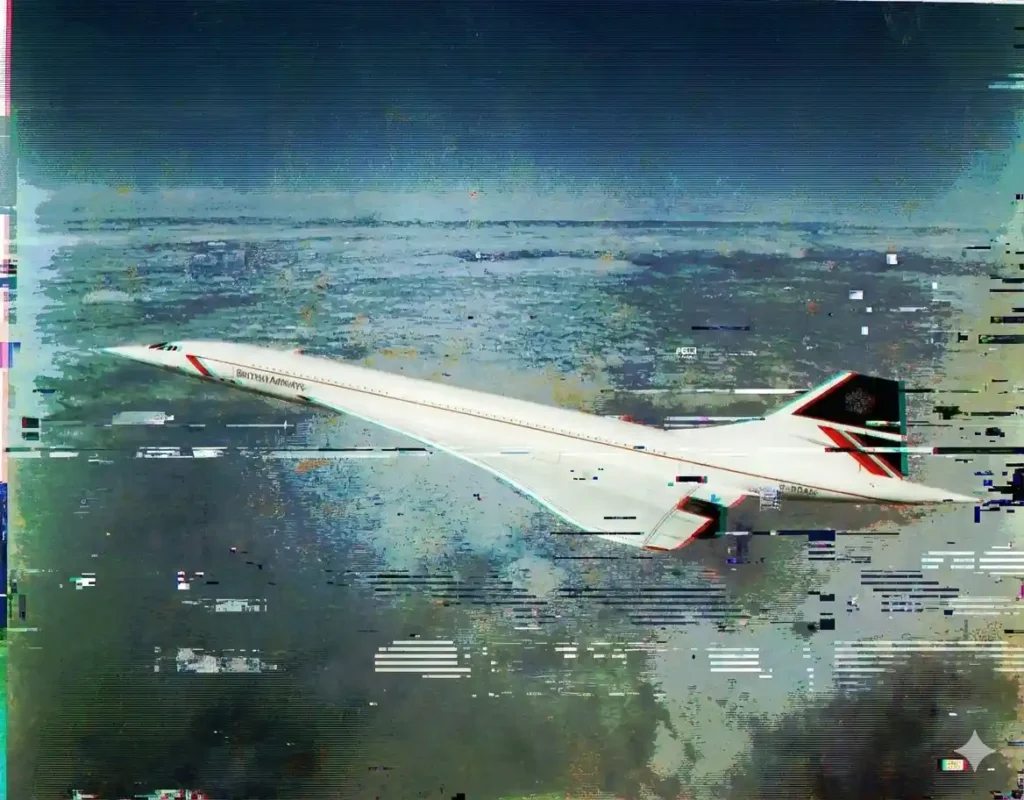

Imagine crossing the Atlantic Ocean in under three hours, sipping champagne at 60,000 feet while outrunning the sunset. The Concorde supersonic jet, the iconic Anglo-French marvel, made this a reality from 1976 to 2003. As the only commercially successful supersonic passenger plane, it symbolized engineering triumph amid the jet age boom of the 1960s and 1970s. But behind its sleek delta wings and record breaking speeds lay immense challenges from sonic booms to sky-high fuel costs.
In this deep dive into Concorde history, we’ll explore its supersonic origins, revolutionary design, luxurious flights, tragic end, and even its Soviet rival, the Tu-144. Whether you’re a aviation buff or just love 20th century tech stories, buckle up for a high altitude journey.
The Dawn of Supersonic Flight: Breaking the Sound Barrier
Supersonic aircraft history is inseparable from reactive aviation, which exploded in the early 1940s. Jet engines propelled fighters and bombers to higher speeds and altitudes, expanding tactical possibilities. Yet, reaching supersonic speed faster than sound (Mach 1, about 1,235 km/h at sea level), demanded more than raw power.
As planes neared the sound barrier, aerodynamics shifted dramatically. Airflow over wings and fuselage compressed, spiking drag and causing kinetic heating that could destabilize the aircraft. Pilots faced “compressibility effects,” like violent buffeting. Engineers responded with radical redesigns: slender fuselages, swept wings, and heat resistant materials.
- Key challenges overcome:
- Shockwaves increasing drag by up to 300%.
- Nose up instability at transonic speeds (Mach 0.8-1.2).
- Skin temperatures hitting 127°C (260°F) at Mach 2.
These innovations paved the way for icons like the Bell X-1 (first to break Mach 1 in 1947) and military jets, but civilian supersonic dreams waited for visionaries.
Birth of the Concorde: A Franco-British Powerhouse
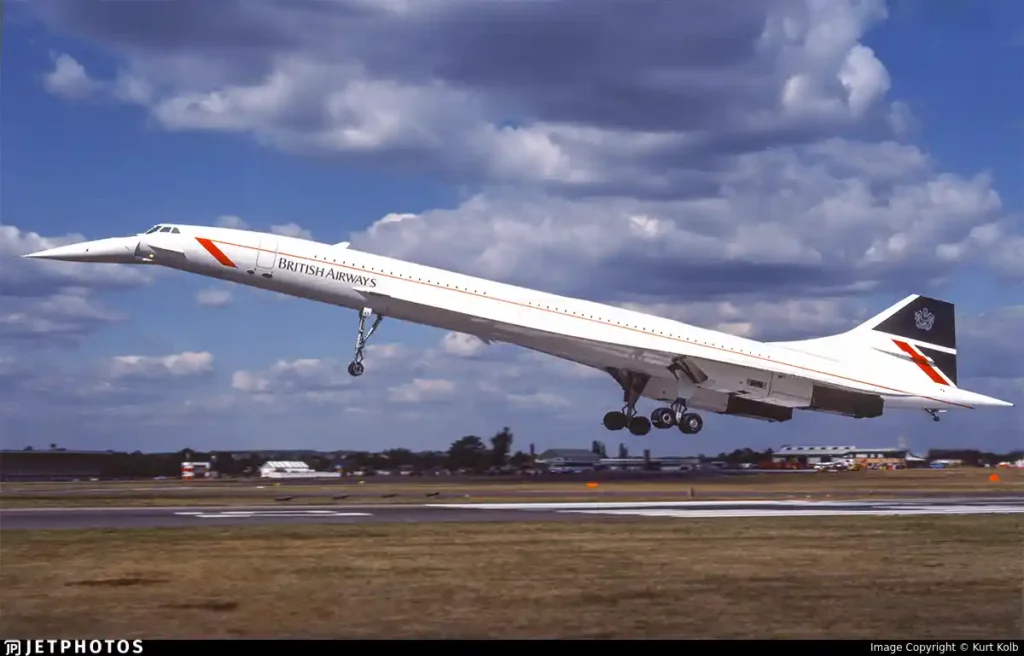
The Concorde supersonic jet emerged from a 1962 treaty between Britain and France, born amid Cold War competition. Designed by Sud Aviation (France) and BAC (Britain), with Olympus 593 engines from Rolls-Royce/SNECMA, only 20 were built, 14 for service, plus prototypes.
British Airways and Air France bought nine each, with five more “gifted” for a symbolic £1 and 1 franc (about 2 BGN today). The first flight soared in 1969, commercial ops began January 21, 1976, and over 27 years, Concorde logged 243,845 flight hours, carrying 3 million passengers on 50,000+ flights.
Its stats stunned:
| Feature | Concorde | Typical Boeing 747 |
|---|---|---|
| Cruise Speed | 2,170 km/h (Mach 2.04) | 900 km/h |
| Ceiling | 18,000 m (60,000 ft) | 13,700 m |
| Capacity | 100 passengers + 2.5 tons cargo | 400+ passengers |
| Range | 7,250 km (NYC-London non-stop) | 14,000 km |
A record NYC-London flight took 2 hours 52 minutes, slashing travel time by half.
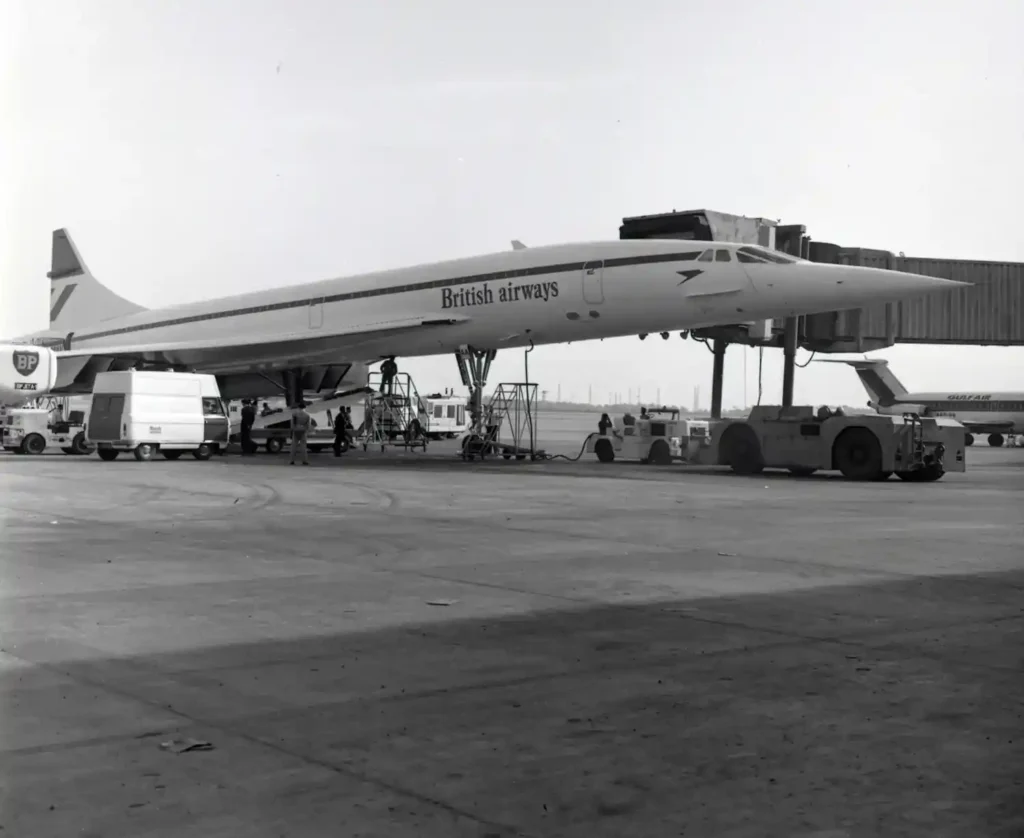
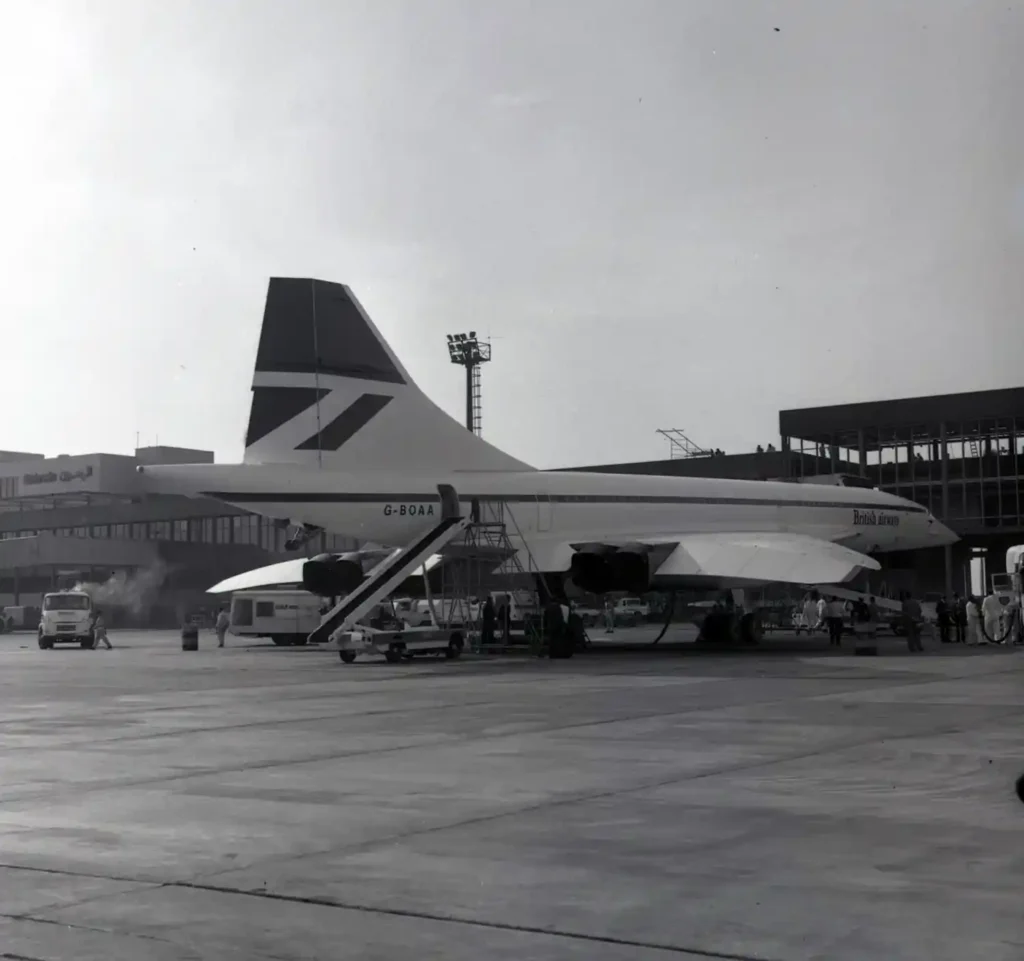
Revolutionary Design: Wings Like Fighters, Nose That Droops
What made the supersonic passenger plane possible? Unique engineering for low- and high-speed flight.
Delta Wings for Speed
Borrowing from fighters like the Mirage III, Concorde’s ogival delta wings minimized drag at Mach 2 while generating lift. But they produced less lift at takeoff/landing, demanding 500+ km/h runway speeds—longer runways and droopable noses helped.
Droop Nose for Visibility
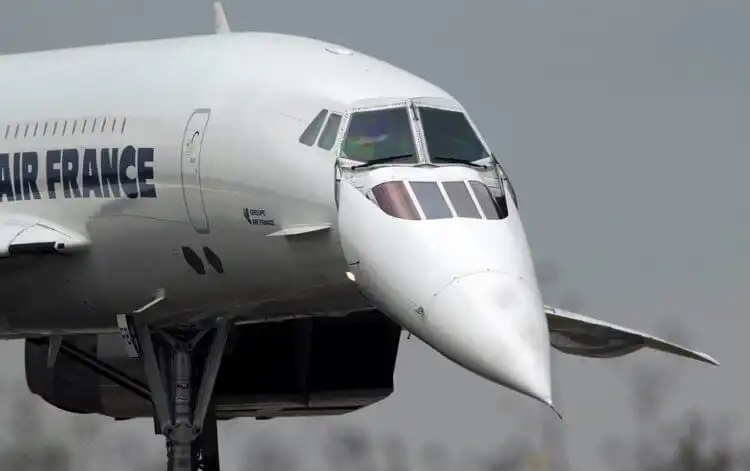
The needle like fuselage optimized supersonic flow but blinded pilots during takeoff/landing (nose pitched 10-12° up). A hydraulic “visière” lowered the nose 12.5° on command, like a bird dipping for prey. Pilots called it the “droop snoot.”
Turbojet Powerhouses
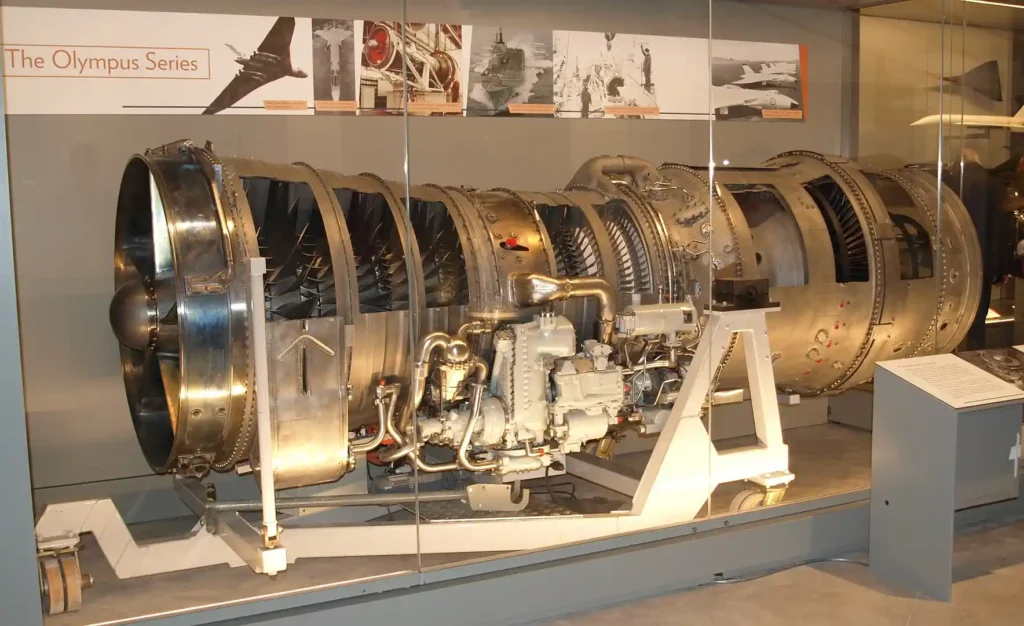
Four Olympus 593 afterburning turbojets delivered 169 kN thrust each, with reheat injecting fuel into exhaust for bursts. They guzzled 26,000 liters/hour—4x a Boeing 747’s, but enabled 18,000m cruises where air was thin and cool.
Aluminum alloys (with titanium reinforcements) withstood heat, while a slender 62m fuselage housed a slim 2.6m-wide cabin.
Luxury in the Stratosphere: Champagne, Caviar, and Sun-Chasing
Concorde wasn’t just fast, it was elite. Tickets cost $11,000+ round-trip (about $20,000 today), rivaling a luxury yacht charter. The cabin evoked 1970s glamour: white leather seats (2-2-2 layout), panoramic windows, and gourmet meals like black caviar, roast grouse, and Dom Pérignon.
Passengers, celebrities, CEOs, royals savored “outpacing the sunset”: Westbound evening flights from London/Paris chased daylight, watching sunrise from the west at 60,000 feet. One 1986 British Airways Concorde circled Earth (49,000 km) in 29 hours 59 minutes.
Flights to Brazil, Australia, and Africa sold out despite never filling completely. It felt like joining the global elite, next to princes or rock stars, served by tuxedoed crew.

The Fatal Crash and Grounding: Air France Flight 4590
Concorde‘s story darkened on July 25, 2000. Air France Flight 4590, bound from Paris Charles de Gaulle to JFK, ingested debris from a Continental DC-10’s tire on takeoff. The tire exploded at 350 km/h, shredding the left wing’s fuel tank and igniting a fireball.
- Timeline:
- 16:38 takeoff; debris strike.
- Left engines 1-2 lose thrust; undercarriage stuck down.
- 16:40 crash into Gonesse hotel; 109 aboard + 4 on ground killed.
The fleet grounded for 15 months. Fixes included Kevlar lined tanks, reinforced tires, and debris scanners. Flights resumed November 2001, but 9/11 slashed demand. Air France retired in May 2003; British Airways’ last NYC flight was November 26, 2003 (G-BOAF to JFK’s Intrepid Museum).
Memorials endure: Gonesse’s glass slab with wing fragment; a 6,000 m² topiary Concorde in Mitry-Mory.
Soviet Rival: The Tu-144’s Brief Challenge
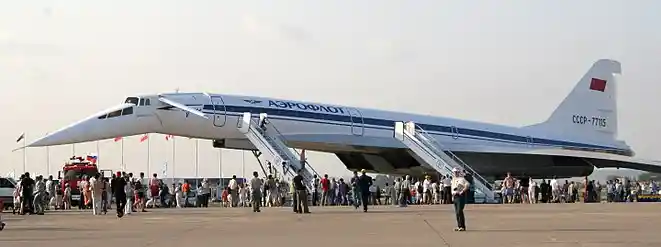
Concorde faced the USSR’s Tu-144, first supersonic passenger prototype (1968 flight, Paris Air Show 1973 debut). Faster at Mach 2.15, it carried 140 but suffered crashes (1973 show, 1978 test), poor reliability, and withdrew commercially by 1978 after just 102 flights. Spy claims and rushed development doomed it, Concorde flew 50,000+.
Why Concorde Faded: Costs, Bans, and Legacy
Fuel prices quadrupled post 1973 oil crisis (38% of costs), sonic booms banned it overland (U.S., most Europe), limiting routes to overwater. No successors emerged, Boom Overture aims for 2029 revival.
Yet Concorde endures in museums (London’s Science Museum holds one) and pop culture, inspiring films like Concorde (1979) and dreams of hypersonic futures.
The Concorde supersonic jet proved humans could conquer Mach 2 commercially, for a glamorous era.