Write to us:
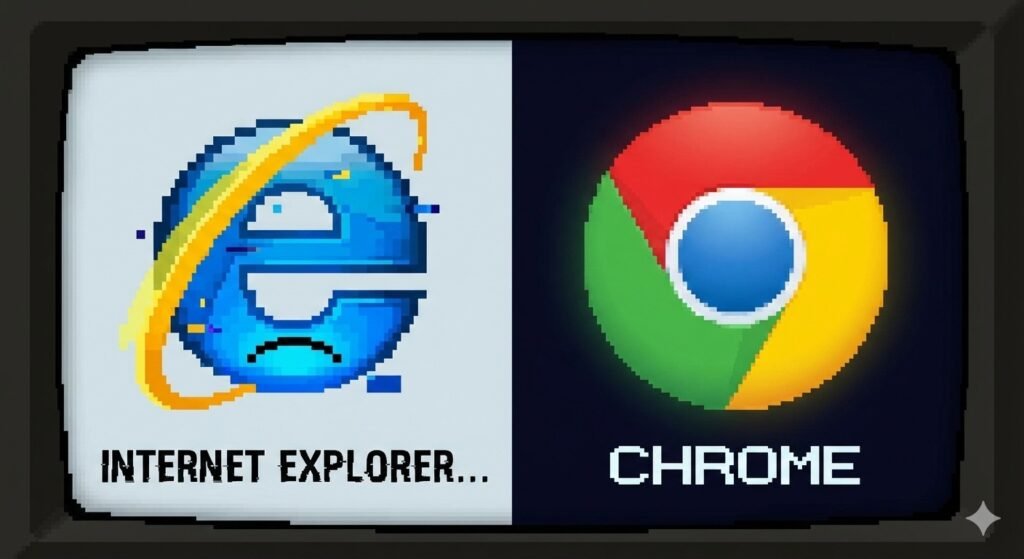

Because every empire falls—and some fall hilariously slowly.
The War of the Worlds: How Netscape Lost the Fight
Boot up the late ’90s and you’ll land in the middle of the original Browser Wars. Netscape Navigator was the pioneer—the cool kid who built the first roads on the web. Then Microsoft arrived, not with a better browser, but with a better strategy: bundle Internet Explorer into every Windows machine on the planet.
This move became one of the biggest structural glitches in internet history. IE was free. IE was already installed. IE was impossible to ignore.
Netscape, built on a paid model, never stood a chance. By 2002, Internet Explorer controlled 95% of the browser market. The web didn’t just run on IE—IE owned it.
The Decline: When the King Stopped Moving
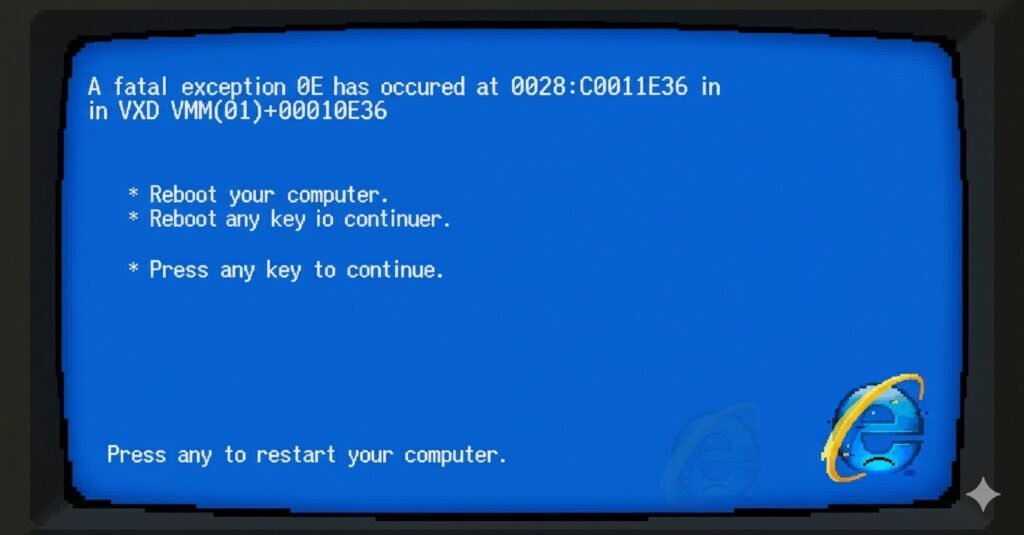
Absolute dominance comes with a price: stagnation. With no competition pushing Microsoft forward, Internet Explorer aged quickly. As the web evolved, IE didn’t. Instead, it became legendary—for all the wrong reasons.
- Slow loading times
- Infamous security holes
- Zero respect for modern web standards
- The dreaded “Not Responding” freeze
For millions, Internet Explorer was the internet—painfully slow, slightly broken, and always two steps behind. And from that universal frustration came its true cultural moment: IE as the outdated, confused uncle of the browser world.
IE’s True Legacy: The World’s Most Popular Download Tool
In the final twist of irony, Internet Explorer spent the last decade of its life serving one main purpose: to download a better browser.
Chrome, Firefox, and even Microsoft’s own Edge all entered users’ devices through the same blue “e” that once dominated the web. IE became the dusty key you use only once—just to leave the room.
Microsoft eventually retired the name, but the memories remain. That glowing blue icon is permanently etched into the minds of everyone who lived through Web 1.0.
Internet Explorer wasn’t just a browser. It was the slow, chaotic, beautifully broken beginning of the modern internet—a glitch we’ll never forget.