Write to us:
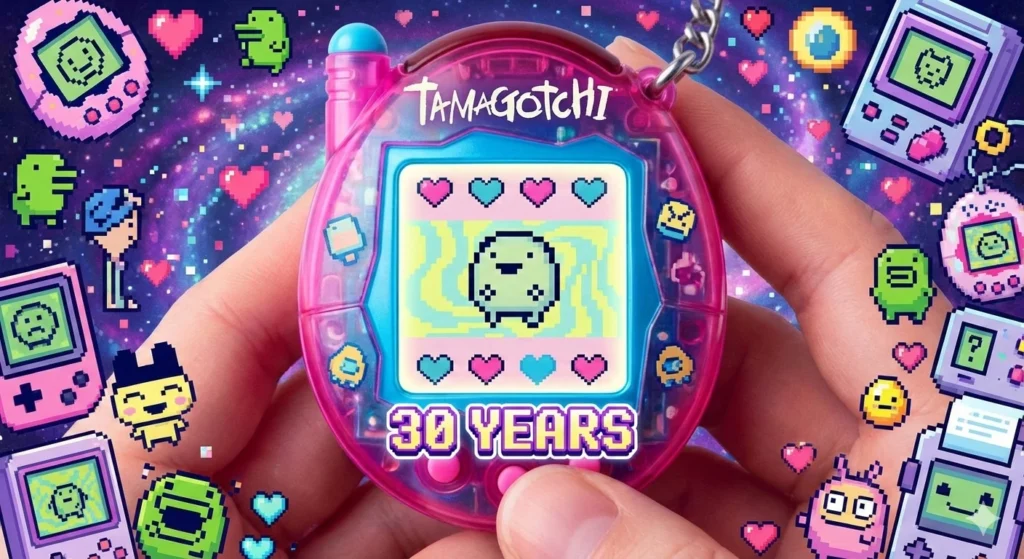

Remember the beeps from your pocket in the late 90s? That tiny egg shaped gadget demanding food, playtime, or a cleanup before it met a tragic pixelated end? Tamagotchi wasn’t just a toy, it sparked a global obsession, teaching a generation about responsibility, loss, and unbreakable bonds with machines. Launched by Japanese toy giant Bandai in 1996, these portable digital pets exploded into a phenomenon, selling over 40 million units worldwide in just two and a half years. By July 2024, cumulative sales had soared past 100 million, rivaling icons like Nintendo Switch and Sony PlayStation.

As we hit 2026, Tamagotchi celebrates its 30th anniversary with fanfare. A major exhibition kicks off this month at Tokyo’s Roppongi Museum, touring other Japanese cities, while Uniqlo partners with Bandai for fresh apparel drops. But why does this simple device endure? Let’s hatch the full story.
From a TV Ad to a Global Craze: The Origin of Tamagotchi
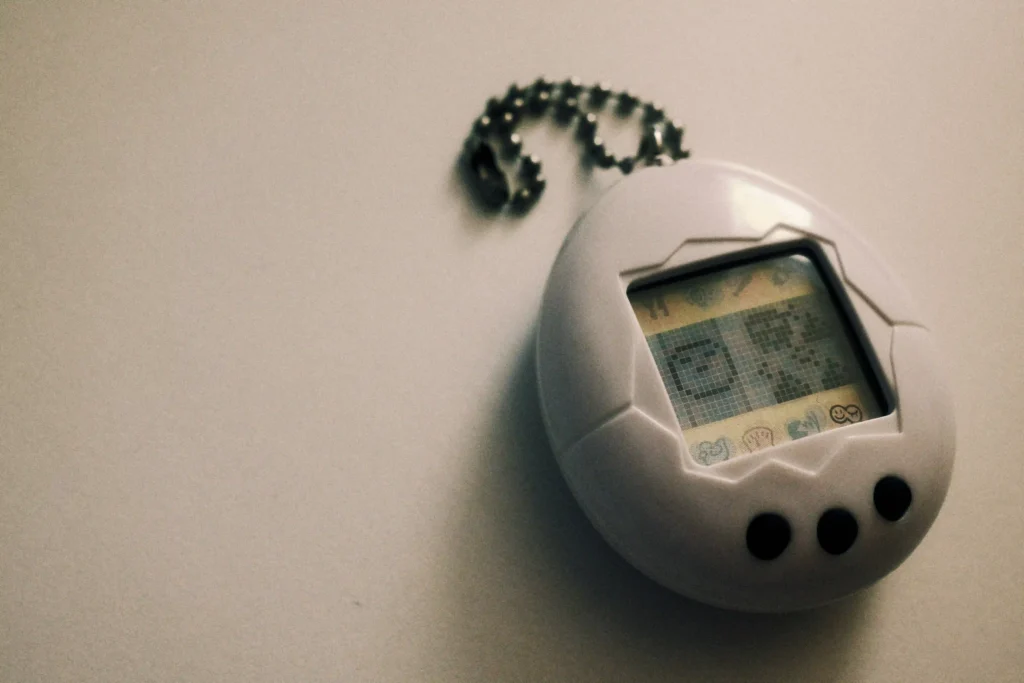
The spark ignited for creator Akihiro Yokoi while watching a TV ad of a boy longing to take his turtle on a school trip. Yokoi, envisioning a virtual companion that fit anywhere, refined ideas from earlier digital pets like the 1989 Neko, a basic virtual cat chasing mouse cursors. Bandai transformed it into an egg-shaped keychain with three buttons: feed, clean, play.
Initially pitched for boys, market research flipped the script, high school girls showed massive interest, leading to pastel designs and rounded aesthetics. Released November 23, 1996, in Japan, it sold out instantly. By 1997, it hit the US, UK, and beyond, causing shortages. In Eastern Europe, including Bulgaria, bootleg versions and imports fueled playground hysteria amid post-communist economic shifts, blending Japanese tech with local 90s nostalgia alongside MTV hits and early mobile phones.
Tamagotchi became a 90s pop culture staple, millennials’ “digital best friend” pre smartphones. Facebook threads brim with tales of midnight feedings and heartbreak: “Only 90s kids know the gut, wrench of your Tamagotchi dying in class.”
Emotional Pixels: How Tamagotchi Built Machine-Human Bonds
Paola Antonelli, MoMA’s senior curator, calls Tamagotchi “one of the first to show design can cultivate emotional ties with machines.” Featured in MoMA’s 2011 “Talk to Me” exhibit, its DNA echoes in Siri, fitness trackers, and AI companions that nag, reward, and connect.
What made it genius? No fancy graphics, just behavioral loops of care (feed the hungry pet), neglect (watch it scold or sicken), duty, and reward (evolve to adults, even “marry” via infrared links in later models). “The emotional weight came from behavior, not story,” Antonelli notes. “That’s why we remember it decades later.”
This hit home during tough times. Toronto’s Gray, from the Tamagotchi mass wedding club, rediscovered his collection post-grandma’s pandemic death: “They grounded me in darkness. Caring for my Tamagotchi helped me care for myself.”
Amid 90s 3D spectacles like Super Mario 64, Tamagotchi’s pixel charm shone—bright shells, keychains, pastel hues made it irresistible and collectible.
Collectors’ Paradise: Rare Finds and Skyrocketing Values
Bandai amplified appeal with 38 models across 50+ countries, from 1997 Hong Kong exclusives (now at M+ Museum) to K-pop collabs with Blackpink and Stray Kids. San Francisco collector Erina Hasegawa, 40, boasts 1,700 units, investing $60,000 in Japanese, US, European, Aussie, and NZ editions.
She pairs them with outfits, hunts secret features, like cleaning 100 messes in Tamagotchi Paradise for 1,000 Gchi points (in-game currency). Her mint green family sets, bought for $30 each in 2010, now fetch $7,000 a piece. Hasegawa treasures her P1 original (Bandai’s bestseller) in hot pink, queued with her dad as a kid.
Post-90s shortages, 2004’s Tamagotchi Connection revived it with IR pet linking. Newer hits: 2021’s camera equipped Tamagotchi Pix (with virtual babysitter), 2023 Wi-Fi Uni, and 2025 Paradise for preschoolers with mini-games and unique baby breeding.
Online, YouTuber Dani Bunda (@lovepandabunny) from Michigan shares tutorials; Florida’s Jordan Vega (@electronicdays) racks million+ TikTok views customizing shells.
Therapeutic Pixels: Tamagotchi as Mental Health Ally
Under the shell, Tamagotchi taps our innate caregiving drive, says therapist Dr. Jessica Lamar of Bellevue Trauma Recovery Center. “It offers structure and routine to ease anxiety in a safe, controlled space joy of care without real life pressures. Start, pause, reset anytime.”
New Yorker Dreadayants keeps hers on a lanyard, sets alarms, hers thrive two years past the two week norm. “They tame my anxiety, fight loneliness like a lucky totem. I throw hatching-day parties for my imaginary friends.”
Michigan State’s Rabindra Ratan notes simple tasks fulfill autonomy, connection, competence needs less demanding than real pets. For Sarah Serrano-Eskelin, 29, it bonded her with her dying mom: low-energy closeness amid cancer. She founded NYC’s Tamagotchi Club (120 locals, 3,000 online).
Global communities thrive: Toronto’s Gray hosts picnics, weddings, inspiring clubs in Australia, Chile, France, Philippines. “Tamagotchi effect,” Gray says. “Adults crave playful connection, it proves how vital it is.”
Legacy in the Smartphone Era: Why Tamagotchi Endures
Tamagotchi pioneered “emotional design,” influencing apps like Duolingo (streaks and reminders) and Pokémon GO (collecting bonds). In Eastern Europe, it symbolized 90s Western imports, evoking Simpsons marathons and bootleg VCDs.
Sales prove resilience: 91 million by 2023, per Bandai. 2026 events signal more, expect AR revivals or metaverse pets. For glitchback readers nostalgic for 80s-2000s vibes, dust off yours: that beep still calls.