Write to us:

A Sofia ’90s Kid’s Heartbreak
Picture this.
It’s 1994 in Sofia.
Studentski Grad is still half-concrete, half chaos. The tram screeches outside, the walls are thin, and your TV is some anonymous Eastern European brand that takes three solid punches on the side before the picture stabilizes.
And then it appears.
That fractured, neon MTV logo, flickering like a migraine after too much rakia.
For us, the kids of the ’90s, MTV wasn’t just television.
It was an escape hatch from the grayness of post communist reality. A portal to somewhere louder, freer, cooler, somewhere that felt alive.

How MTV Reached Bulgaria (Almost Illegally)
MTV trickled into Bulgaria around 1992–1993, mostly through satellite pirates, improvised antennas, and friends-of-friends who “knew a guy.” It arrived at the exact moment when everything here was unstable: hyperinflation, first Levi’s imports, Deutschmark stashes, and rumors of underground clubs popping up in the city center.
We watched it however we could, in dorm rooms, in living rooms, on VHS tapes copied so many times the image looked like abstract art.
I remember sneaking Euro MTV after homework, completely hypnotized. TLC’s “Waterfalls” sounded surreal when dubbed over by a Bulgarian voice that made it feel like unsolicited life advice from your grandmother.
“Don’t go chasing waterfalls” suddenly hit differently.
MTV Was the Internet Before the Internet
Some context we forget:
- MTV launched on August 1, 1981 in the US
- The first video ever aired was “Video Killed the Radio Star” by The Buggles — a prophecy that actually came true
- By 1984, MTV reached 28 million US households
- MTV Europe launched in 1987, broadcasting from Amsterdam (later London), reaching 50 million homes by 1990
By the time it hit us, MTV already felt like a global religion.
TRL, Beavis and Butt-Head, 120 Minutes, Unplugged, these weren’t shows, they were rituals.
Eric Clapton crying through Tears in Heaven.
Nirvana’s raw, haunting Unplugged in ’93.
Michael Jackson’s Thriller turning music videos into cinema and winning 9 VMAs.
MTV didn’t just play music — it taught us how to feel.
Sofia ’90s: VHS Culture, Hair Bleach, and Tape Parties
MTV hit Bulgaria like electricity.
Summers in Borisova Gradina, we traded VHS tapes like contraband.
Ace of Base for Snap!
Prodigy for Oasis.
Someone always had a “new recording from last night.”
In Studentski Grad basements, tape parties became our first clubs. 120 Minutes fed the early alt rock crowd, while dance blocks planted the seeds of Sofia’s rave scene.
We bleached our hair because of Green Day. We argued about Backstreet Boys vs. Take That on trams. Parents shook their heads: “Too American.”
But MTV gave us something Bulgaria and maybe the other Balkan countries didn’t yet have, a shared youth culture.
Even local attempts like MM (Music Mania) tried to copy the format, complete with Bulgarian VJs. But the originals felt dangerous, illicit, imported straight from another universe.
When MTV Ruled the World
At its peak, MTV Europe pulled 100–150 million viewers worldwide.
TRL (1998–2012) turned Times Square into a daily screaming ritual. Britney Spears topped the chart 65 times purely through fan votes. MTV wasn’t reacting to culture, it was creating it in real time.
As former MTV UK presenter Simone Angel later said:
“MTV Europe was the predecessor of the internet.
It was where everything came together.”
She wasn’t wrong.
The Slow Fade: From Music to Reality
Then came YouTube (2005).
Then streaming.
Then algorithms.
Music videos stopped being events and became background noise.
MTV’s US viewership dropped 75% from its 2000 peak. Reality TV took over: The Osbournes, Punk’d, Jersey Shore. By the 2010s, the channel barely resembled itself.
And now, quietly, the final blow.
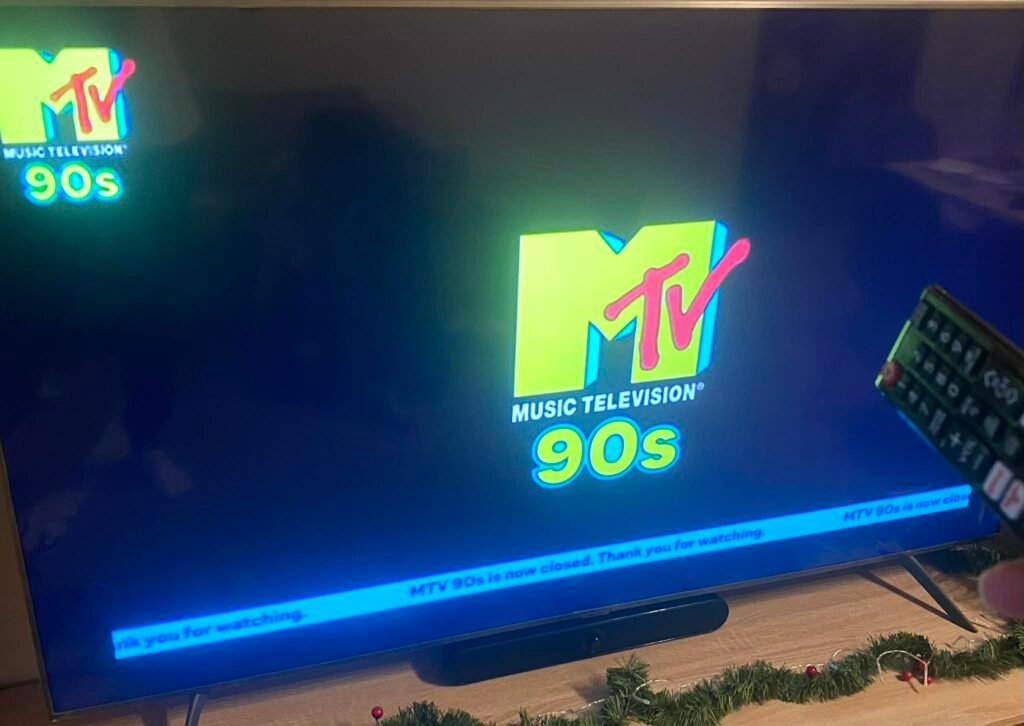
According to the BBC, five MTV music channels — MTV Music, MTV 80s, MTV 90s, Club MTV and MTV Live — are shutting down in the UK and Europe on 31.12.2025. The main MTV HD remains, but focused almost entirely on reality formats.
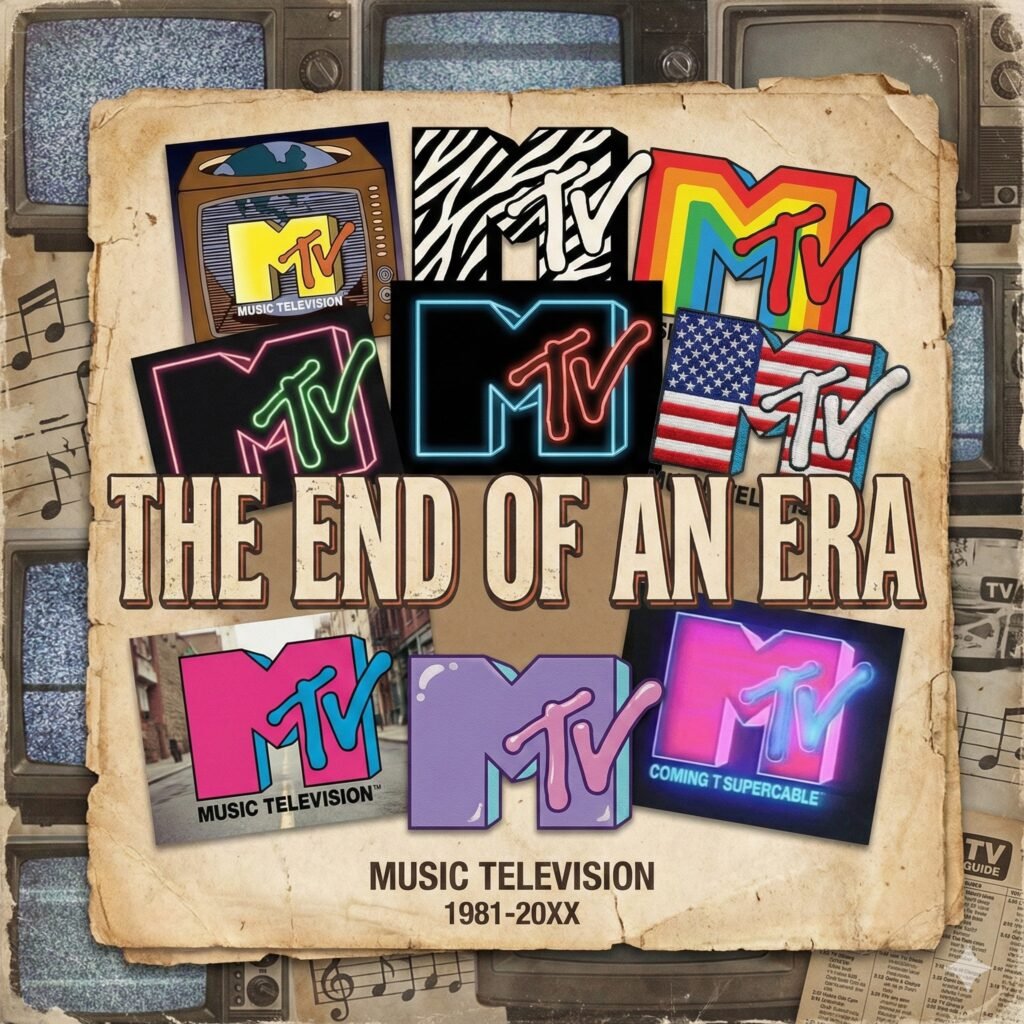
MTV – and the end of an era.
Simone Angel put it best:
“Yes, today we do this online, in our small digital bubbles.
But MTV was where everything came together.
That really breaks my heart.”
The last songs aired?
Classics.
Including “Goodbye” by the Spice Girls — an unintentionally perfect farewell.
Why This Actually Hurts
This isn’t just nostalgia.
MTV was a cultural meeting point. A shared feed. A place where unknown artists could suddenly become global. Where Sofia, London, Berlin, and New York felt strangely close.
Today we stream 100 billion tracks a year, perfectly tailored, perfectly isolated. Everything is available and nothing feels communal.
MTV wasn’t perfect.
But it was ours.
And for every ’90s kid in Bulgaria who grew up with a flickering signal and a dream of somewhere louder, this really does feel like the end of an era.