Write to us:
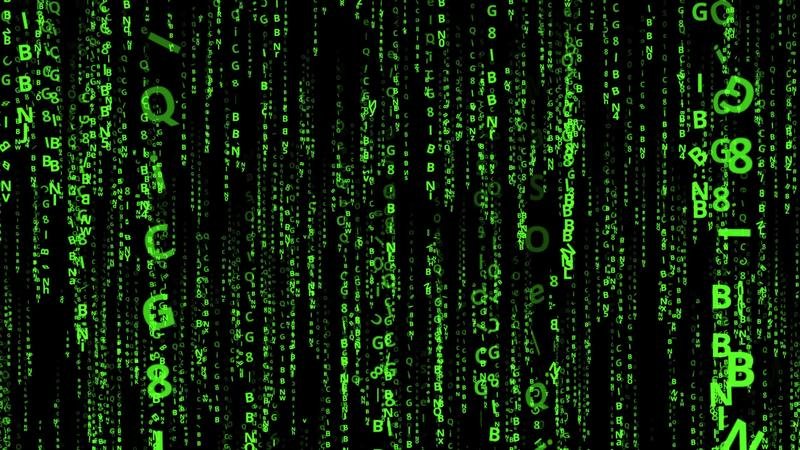

In 1999, cinema hit a glitch in the system. The Wachowskis dropped The Matrix, and suddenly our screens and our minds weren’t the same. This wasn’t just an action flick with killer bullet time effects. It rewrote the code for how we visualize technology, hacking and reality itself. The iconic Matrix code, that endless cascade of glowing green characters became the blueprint for 21st-century digital culture. Today, on glitchback.com, we’re diving deep into how one movie turned sci-fi into our everyday aesthetic, from web design to philosophy. If you’ve ever wondered why your hacker costume feels like Neo’s wardrobe, this is your red pill.
The Birth of Digital Rain: From Sushi to Screen Savior
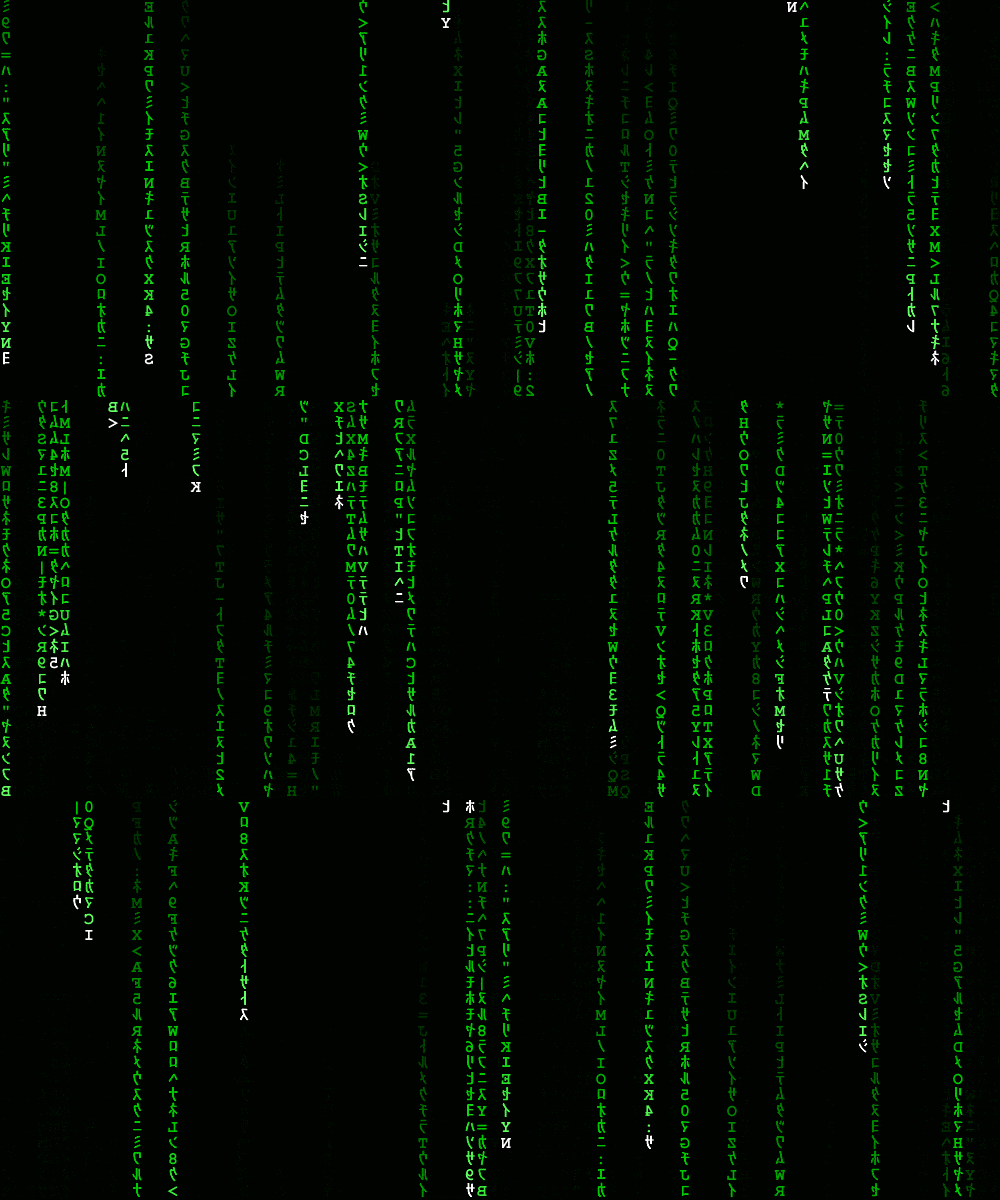
Before The Matrix, movies treated computers like props: clunky beige towers beeping in the corner, or dramatic typewriters for “hacking” scenes. Think WarGames (1983), where a modem screech was high tech suspense. Then came the digital rain, those hypnotic streams of emerald katakana, hiragana, and kanji scrolling down a black void.
Fun fact: This wasn’t random hacker gibberish. The code originated from Japanese sushi recipes, scanned and repurposed by the film’s team. Lead designer Simon Whiteley confessed in interviews that he digitized his wife’s cookbooks for authenticity. Despite its faux Japanese roots, Matrix code exploded as the ultimate symbol of “the internet.” Google it today, and you’ll see it everywhere, from stock photos of cybersecurity to Twitch overlays.
Why It Stuck: The Aesthetic of “Hacking” as a Spiritual Quest
Post Matrix, computing shed its nerdy skin. It became mystical, almost religious. The black background with neon green monospaced fonts? That became the default for early 2000s web design. Sites, like old-school forums, GeoCities pages, and even Flash intros mimicked it. Developers chased that cyberpunk vibe, turning code into cave paintings for the digital age.
- Influence on web design: Early sites like the Internet Archive or hacker zines adopted green on black for “authenticity.” Even today, tools like VS Code themes and terminal emulators offer “Matrix mode.”
- Pop culture ripple: Video games (Hacknet, Deus Ex), TV (Mr. Robot‘s command lines), and ads (Samsung’s tech promos) all nod to it.
- Modern legacy: Crypto wallets, NFT marketplaces, and AI demos still use digital rain for that “futuristic” sheen. It’s SEO gold search “Matrix code generator,” and free tools pop up everywhere.
The Matrix made hacking visual poetry. No more boring interfaces; now, it’s a glitchy trance. This shift mirrored our growing immersion in screens, where code feels alive, pulsing like a heartbeat.
Leather Trenches, Tiny Shades: The Fashion of Digital Rebellion
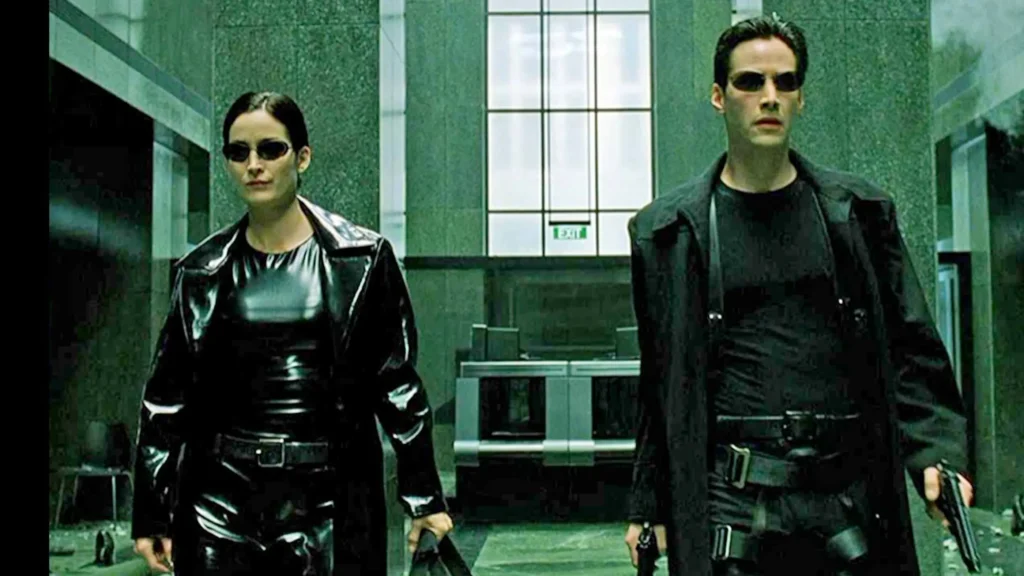
Walk into any tech conference circa 2002, and you’d spot them: long black leather trench coats billowing like capes, mirrored sunglasses perched on noses, boots thudding with purpose. The Matrix didn’t just sell tickets; it sold a uniform. Neo and Trinity turned latex and leather into the armor of the enlightened.
Costume designer Kym Barrett drew from fetish wear and goth subcultures, blending them with high fashion edge. The result? A look that’s equal parts practical (bulletproof vibes) and philosophical. It screamed, “I’m awake in a world of sleepers.”
Beyond the Look: Red Pill vs. Blue Pill and the Digital Disconnect
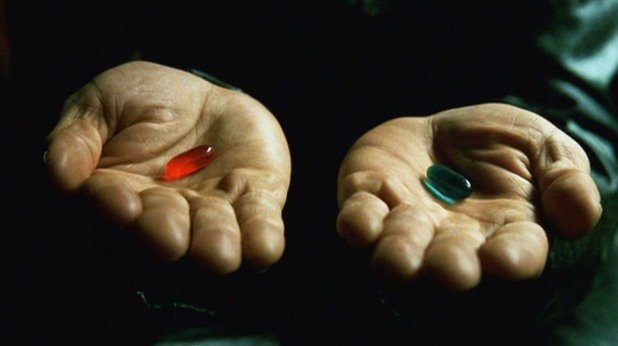
But fashion was the gateway drug. The real hack was the philosophy. That pivotal choice, red pill for truth, blue pill for blissful ignorance gave us shorthand for awakening. Pre Matrix, we didn’t have memes for questioning reality. Post Matrix, “take the red pill” became code for everything from conspiracy theories to therapy breakthroughs.
The film nailed our emerging split: physical bodies rotting in pods, digital avatars thriving in the sim. Sound familiar? Scroll Instagram today, curated feeds vs. messy real life. The Matrix predicted our avatar economy, where TikTok dances feel more “real” than grocery shopping.
- Cultural vocabulary: “Glitch in the Matrix” now means déjà vu or coincidence (1.2 million Google hits monthly).
- Philosophy unpacked: Drawing from Plato’s cave allegory and Baudrillard’s Simulacra and Simulation (shoutout to the book propping up Neo’s gun), it asked: Is the pixelated world more real?
- 2000s tech bro uniform: Larry and Sergey at early Google events? Matrix coded. It influenced hackers at DEF CON and even Wall Street quants.
This aesthetic philosophy mashup made The Matrix a cultural OS upgrade. It installed doubt about “reality” just as broadband and smartphones blurred our worlds.
Bullet Time and Beyond: Ripples in Cinema and Tech
The Matrix didn’t stop at visuals. John Gaeta’s bullet time (those 360-degree slow-mo dives) required custom rigs with 120 cameras. It birthed effects in Max Payne, Inception, and TikTok slo-mo edits. Search “bullet time tutorial,” and DIY guides abound proof of its DIY legacy.
Sequels expanded the code: Reloaded and Revolutions (2003) deepened the lore, while Resurrections (2021) meta glitched it for Gen Z. The franchise grossed over $1.8 billion, but its intangibles Matrix aesthetic shaped streaming era blockbusters like Cyberpunk 2077 or Arcane.
The Matrix Code Today: Still Glitching Our Reality
Fast-forward to 2026: AI art generators spit out digital rain variants. VR worlds like the metaverse ape the sim. Elon Musk tweets “red pill” moments; QAnon co-opts the metaphor. Yet, the Wachowskis’ genius endures, they made us feel the glitch.
Critics knock the sequels or trans allegories (Lana Wachowski confirmed the parallels), but the original’s code remains unbreakable. It defined 21st-century visuals: green glow for tech, leather for rebels, pills for truth.