Write to us:
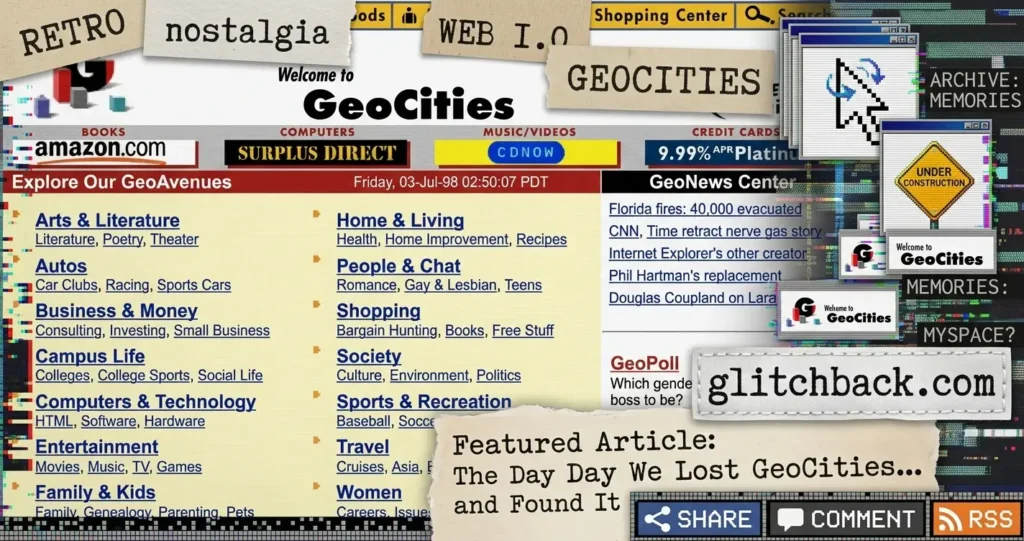

Remember the dial-up screech, blinking GIFs, and personal homepages screaming “UNDER CONSTRUCTION”? In the 1990s, GeoCities websites turned the internet into a digital frontier, a chaotic, creative playground where anyone could stake a claim. Launched in 1994, GeoCities wasn’t just a web host, it was the Wild West of the early web, complete with virtual neighborhoods, cowboy style land rushes, and zero rules. By 1999, it hosted over 19 million sites, making it the web’s third most visited destination. This article dives deep into the rise, quirks, and lasting legacy of GeoCities websites, perfect for nostalgia buffs and SEO pros pondering the roots of user-generated content.
The Birth of GeoCities: Free Land in Cyberspace
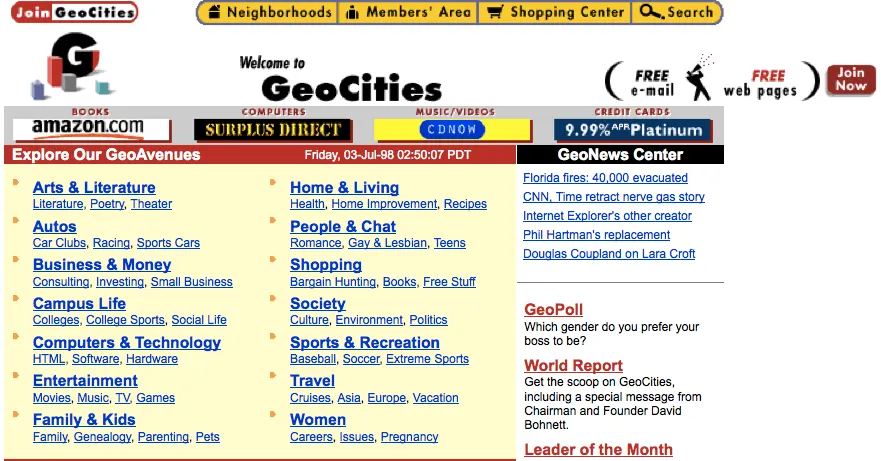
GeoCities started as Beverly Hills Internet, founded by David Bohnett and John Rezner in Santa Monica, California. The big idea? Offer free web space to everyday folks, no coding degree required. Users got 3MB of storage (enough for a homepage, guestbook, and some MIDI files) and could “homestead” in themed “neighborhoods” mimicking real world locales.
Why “GeoCities”? It evoked geographic communities online. Think of it as MySpace meets Craigslist for the pre social media era. By 1996, it rebranded fully to GeoCities and exploded.
Key stats from the era:
| Milestone | Date | Users/Sites |
|---|---|---|
| Launch | November 1994 | 10,000 homesteaders |
| Yahoo acquisition | January 1999 | 19 million sites |
| Peak traffic | 2000 | 120 million monthly visitors |
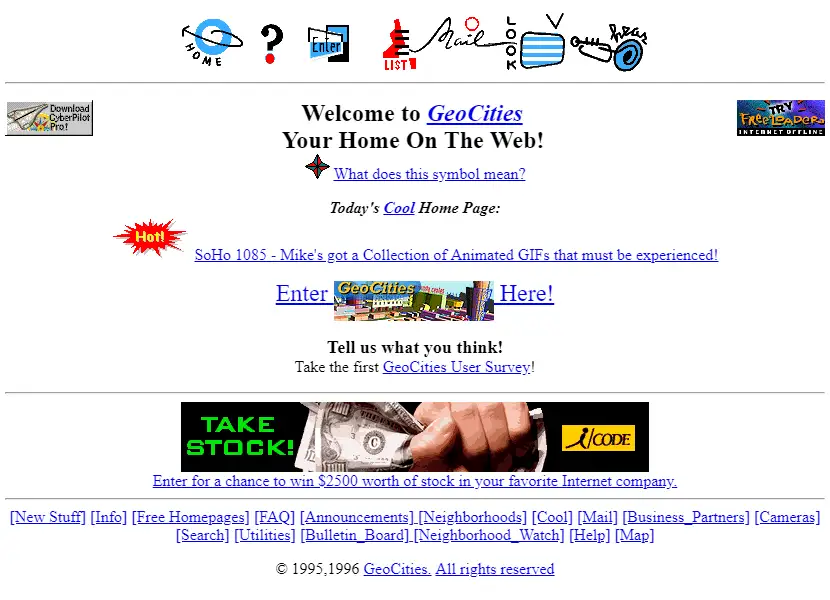
GeoCities websites democratized the web when building a site meant hand coding HTML or paying AOL fees. No ads clogged your page (at first), and subdomains like yourname.athens.geocities.com gave instant credibility.
Virtual Neighborhoods: Your Digital Address in the Wild West
The genius of GeoCities was its 40+ “neighborhoods,” each with a zip code, like prefix and theme. Want to rant about pets? Head to AnimalWorld (00500). Sci-fi fan? Beam up to Area51 (01000). It was themed chaos:
- Athens (01xxx): Philosophy and artsy types think Plato fan pages.
- Hollywood (02xxx): Movie reviews, fan shrines to Titanic (pre-Avatar hype).
- SiliconValley (02xxx): Tech geeks sharing BASIC code and startup dreams.
- Paris (06xxx): Romance, poetry, and angsty teen love letters.
- Tokyo (07xxx): Anime, J-pop, and early otaku culture hubs.
- Bavaria (08xxx): Beer fests, Oktoberfest GIFs, and Euro vibes.
These weren’t random, they fostered communities. Users chatted via guestbooks (powered by simple CGI scripts) and “Webrings”, linked chains of like minded sites, like a daisy chain of blinky buttons. In Eastern Europe, where internet access lagged, expats and locals built GeoCities websites for folk music shares or Balkan nightlife tips, bridging Iron Curtain isolation.
Humor alert: Neighborhoods got weird. “Pet Cemetery” (017xx) hosted RIP pages for goldfish. Rules? Loose. GeoCities enforced a “no adult content” policy, but “Mirror” neighborhoods let you copy others’ sites.
The Golden Age: Blinky GIFs, MIDI Tunes, and Web 1.0 Glory
Peak GeoCities (1996-2000) was pure, unfiltered creativity. GeoCities websites defined early web aesthetics:
- Hit counters: “You’ve visited 000042 times!” (Reset if it hit 99999.)
- Under Construction signs: Spinning hammers and “Come back soon!”
- Marquees and counters: Scrolling welcome messages in
<marquee>tags. - Sound files: Auto-playing MIDI of “Still Drowning” or Star Wars themes (dial-up nightmare).
- Backgrounds: Psychedelic tiles that made text unreadable.
Tools like Yahoo GeoCities PageBuilder let noobs drag-and-drop. Traffic? Insane, your cat’s homepage might pull 100 visitors a day via word-of-mouth on Usenet.
| Iconic GeoCities Features | Why It Rocked | Modern Equivalent |
|---|---|---|
| Blinky GIFs (e.g., dancing hamsters) | Eye candy on slow connections | Animated stickers on Instagram |
| Webrings | Curated discovery | Reddit subs or TikTok duets |
| Guestbooks | Early comments | Disqus or Facebook reactions |
| HTML Goodies (tutorials) | DIY learning | freeCodeCamp |
For SEO nerds: GeoCities pioneered user-generated backlinks. Sites linked freely, boosting crude PageRank precursors. In Eastern Europe, GeoCities websites like those sharing 90s MTV Europe playlists (think Ace of Base fan pages) built niche authority.
The Wild Side: Flame Wars, Copyright Cowboys, and Bandwidth Bandits
True to its Wild West moniker, GeoCities was lawless:
- Geopages: Mirror sites copying popular pages without credit, digital plagiarism saloons.
- Bandwidth hogs: One user’s embedded RealPlayer video crashed neighborhood servers.
- Censorship dust-ups: 1995’s “cybersquatting” bans sparked user revolts. In 1999, German regulators forced adult content blocks, echoing global free-speech rodeos.
Fun fact: Spammers posed as “sheriffs,” hawking web rings. Yet, it birthed stars, many early influencers cut teeth here before Blogger or WordPress.
Eastern European twist: During Yugoslavia’s conflicts (late 90s), GeoCities websites hosted dissident voices and refugee stories, evading local censorship when forums were scarce.
Yahoo Buys In: Taming the Frontier (1999-2009)
Yahoo snapped up GeoCities for $3.6 billion in stock (January 1999), eyeing ad revenue. Changes hit fast:
- Ads everywhere: Banner takeovers slowed loads.
- Storage bumps to 12MB, but stricter TOS.
- GeoCities Japan thrived separately.
Post dot com bust (2001), neglect set in. By 2009, Yahoo axed it, citing “evolving web” (code for Facebook’s rise). Users got 1GB Yahoo Hosting as a goodbye gift, but most pages vanished.
The Shutdown and Digital Archaeology
October 26, 2009: Lights out. 38 million GeoCities websites, terabytes of history, went dark. Archivers like the Wayback Machine saved ~1.5 million, now searchable at oocities.org.
Why the end?
- Social media shift: Facebook profiles killed standalone homepages.
- Bandwidth costs: Free hosting didn’t scale.
- Spam overload: 90% of sites inactive by 2005.
Revival efforts:
- Oocities.org: Mirrors 1M+ pages.
- Geocities.ws: Paid homage site.
- Academic digs: Library of Congress eyed it as “born-digital heritage.”
Legacy: How GeoCities Shaped Today’s Web
GeoCities websites weren’t pretty, but they birthed Web 2.0:
- User-generated content: Precursor to WordPress, Tumblr, TikTok.
- SEO roots: Neighborhoods as proto-categories; webrings as link-building.
- Virality: Shareable weirdness fueled early memes (e.g., Hampster Dance).
Modern echoes:
- Neocities.org: Free, retro hosting with 1M+ sites—pure homage.
- Aesthetic revivals: Y2K web design trends on Instagram.
- Bulgaria angle: Local hackers from GeoCities era now run Sofia tech meetups, crediting it for grassroots coding.
Why GeoCities Still Matters in 2026
As AI tools like Grok churn out perfect sites, GeoCities reminds us: Imperfect passion trumps polish. It proved anyone could own a corner of the web, sparking the creator economy. Next time you scroll a quirky Substack or viral Reel, tip your hat to those blinking pioneers.