Write to us:
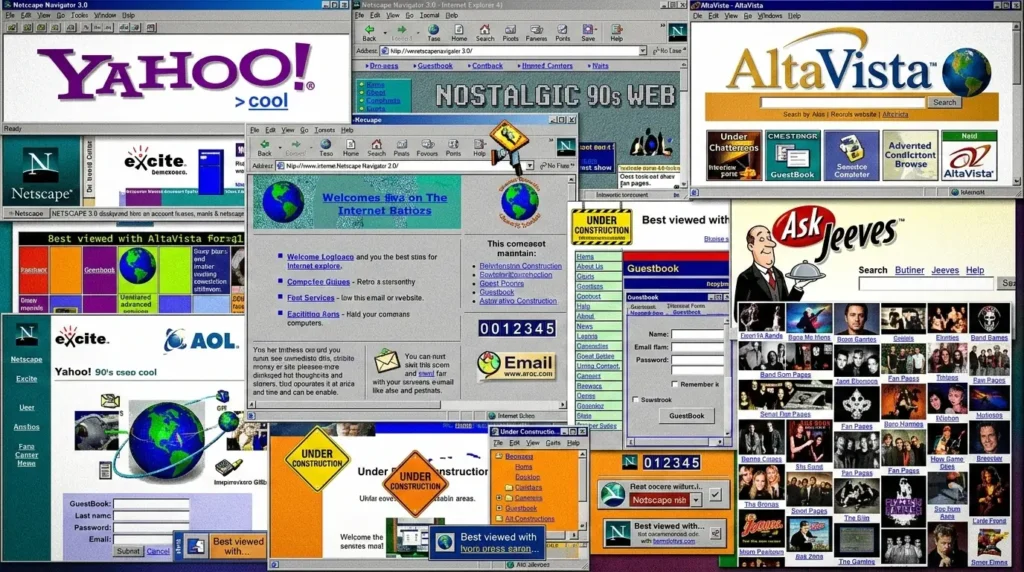

Before Google revolutionized web discovery, the landscape of search engines before Google buzzed with bold experiments in the 1990s. Yahoo!, AltaVista, and Ask Jeeves each carved unique paths, blending human curation, raw speed, and conversational charm to tame the early internet‘s chaos.
The Pre-Google Web Chaos
In the mid 1990s, the web exploded from a few thousand sites to millions, but navigation relied on manual submissions and basic keyword matches. Users “surfed” via bookmarks or directories since SEO was nascent and results often drowned in clutter. Speed defined innovation, while relevance varied wildly without authority based ranking like PageRank.
These pioneers operated amid dial-up connections and no mobile access, yet they indexed a digital frontier that felt vast and uncharted.
Yahoo!: The Directory Powerhouse
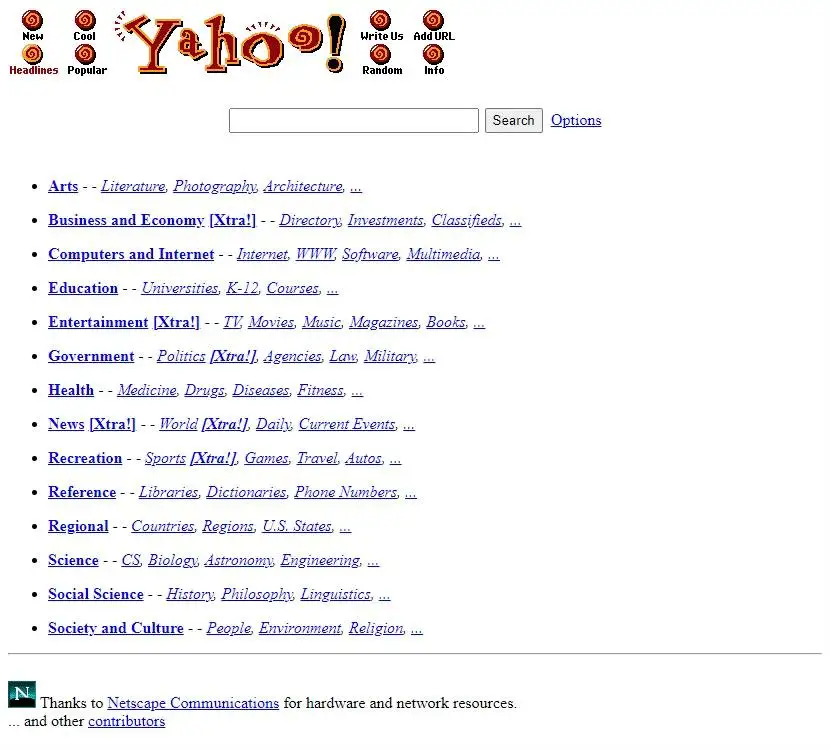
Yahoo! launched in 1994 as “Jerry and David’s Guide to the World Wide Web,” a human curated directory founded by Stanford students Jerry Yang and David Filo. Instead of raw search, it organized sites into hierarchical categories like Arts > Music > Rock, mimicking a library catalog.
By 1996, it evolved into a full portal with email (Yahoo Mail), news feeds, and chat rooms, attracting 100 million users at its peak. It powered searches via partnerships like AltaVista initially, prioritizing structured browsing over pure indexing. This ecosystem made Yahoo the web’s homepage for casual explorers.
Yet manual curation bottlenecked growth as the web ballooned, forcing reliance on external tech, including Google’s own engine from 2000 to 2004, before antitrust issues split them.
AltaVista: The Technical Titan
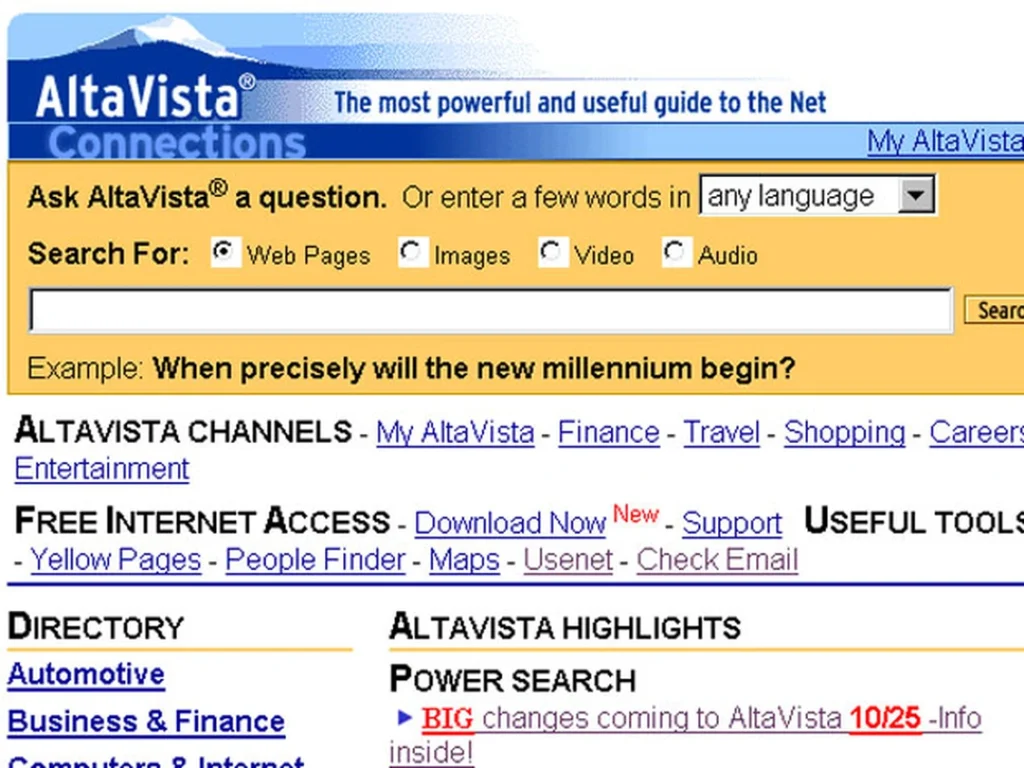
Digital Equipment Corporation unveiled AltaVista in December 1995, leveraging alpha powered servers to index 20 million pages within six months, a staggering scale then. Its full text search delivered sub-second results, supporting Boolean operators (AND/OR/NOT), phrase matching, and multilingual queries.
Power users loved features like AltaVista Image Search and even “AltaVista Babel Fish” for translations, a precursor to modern tools. At peak, it handled 20 million daily queries, outpacing rivals in speed and depth.
Corporate shifts doomed it: CMGI’s 1998 acquisition chased portal bloat with ads and spam infiltrated results, eroding trust. Sold to Overture in 2003 and Yahoo in 2004, it shut down fully in 2013.
Ask Jeeves: The Conversational Butler
Ask Jeeves debuted in 1997, betting on natural language with users asking “What’s the weather in New York?” to butler clad mascot Jeeves. Founders Garrett Gruener and David Warthen used a FAQ database plus partner results (like Direct Hit) for direct answers, not just links.
This Q&A style appealed to non-techies, pioneering intent based search years before Siri or Alexa. It acquired Teoma in 2001 for smarter crawling, peaking with 5 million daily queries.
Jeeves retired in 2006 amid a rebrand to Ask.com, shifting to meta search amid Google’s dominance. Today, it’s an IAC-owned Q&A site, but its human like charm influenced voice assistants.

Feature Comparison Table
Yahoo structured the web, AltaVista powered it, and Ask Jeeves humanized it, each excelling differently.
Google’s Disruptive Edge
Google arrived in 1998 with PageRank, analyzing backlinks for relevance over mere keywords, slashing spam. Its barren white page contrasted ad cluttered portals, while scalable servers handled growth Yahoo and AltaVista chased poorly.
AdWords launched in 2000 tied revenue to relevance, fueling expansion. By 2001, Google claimed 85% market share as predecessors diluted focus on portals over pure search.
Technical Breakdowns
AltaVista’s edge came from proprietary hardware scanning 100 pages/second initially. Yahoo’s “Best 10” results list evolved into algorithmic tweaks. Ask Jeeves parsed 3 million pre-written answers, blending AI stubs with web results.
These systems foreshadowed hybrids: directories in site maps, speed in SSD caches, natural language in BERT models.
Cultural Impact and Fun Facts
Yahoo’s Y! branding spawned a media empire with auctions and games. AltaVista’s “Dejavu” archived deleted pages early. Ask Jeeves’ butler faced parody in cartoons, symbolizing polite tech.
Modern Echoes Today
Yahoo’s categories live in Google Discover feeds. AltaVista’s scale inspires Bing’s index. Ask Jeeves anticipates ChatGPT queries. In 2026, AI search revives their spirits amid Google’s antitrust battles.